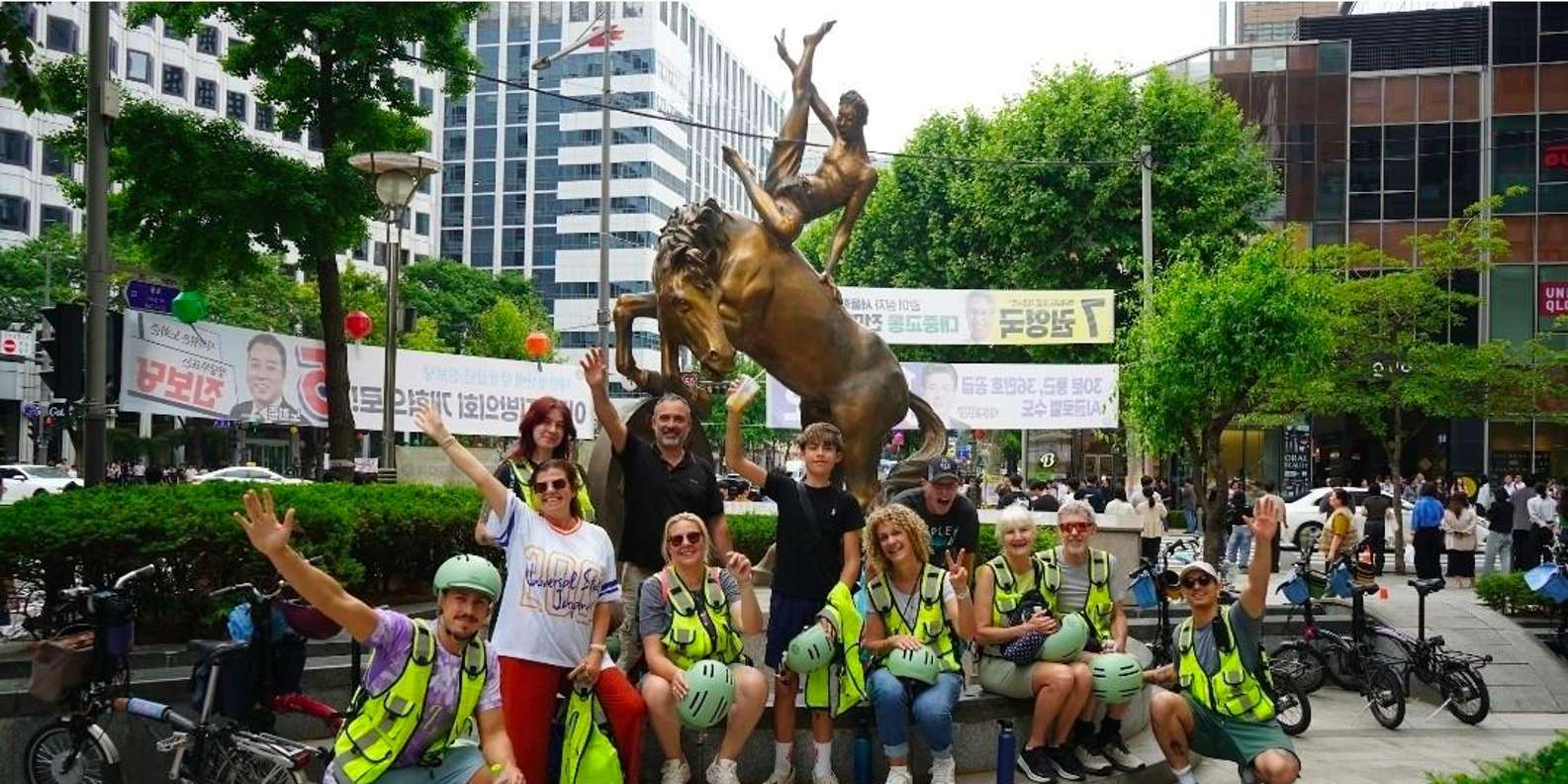
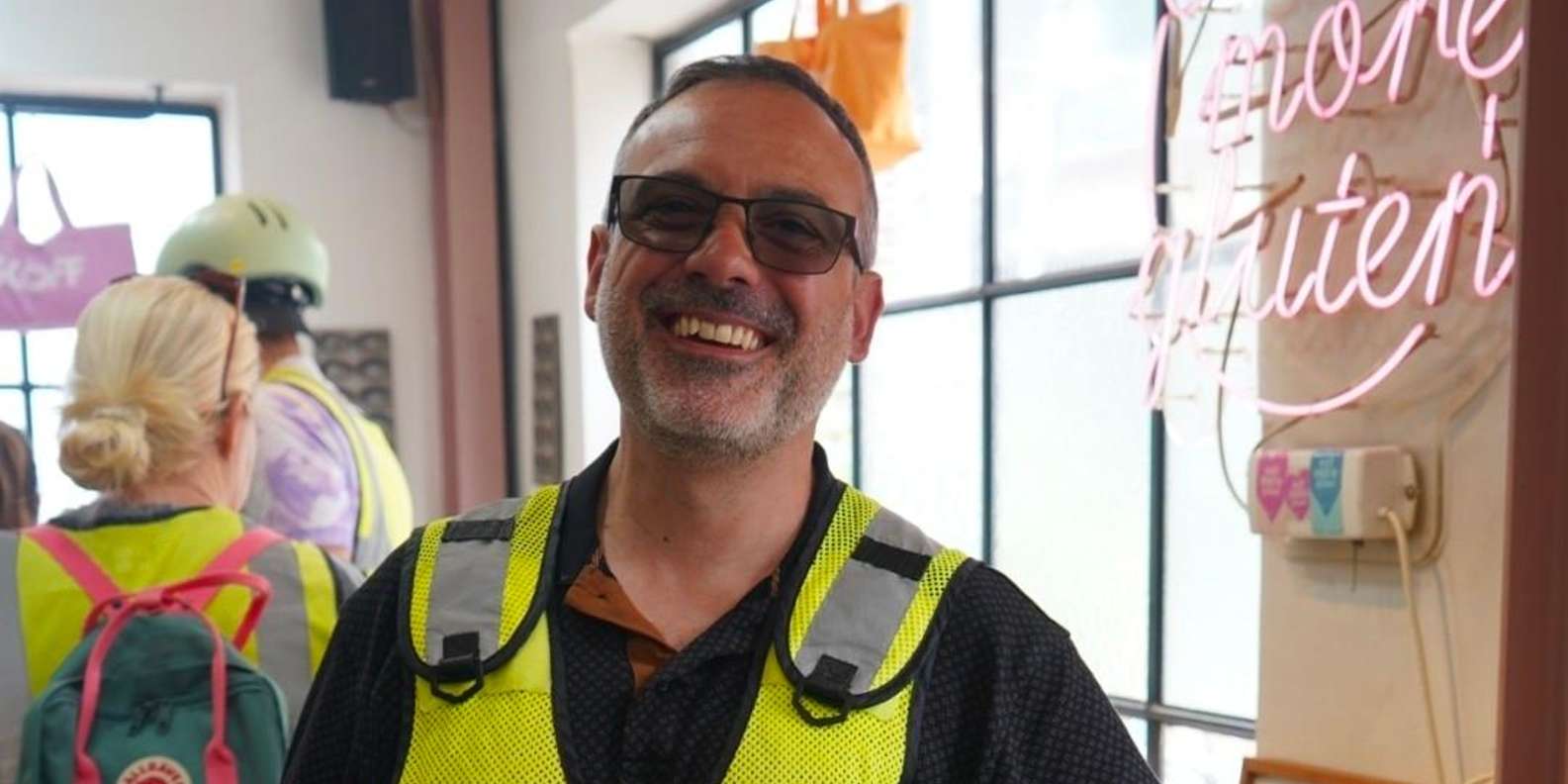
"June, our tour guide was excellent. Very knowledgeable, moved at our pace and patient. He provided restaurant recs as well. I would highly recommend this e-bike tour for anyone. The bikes are very easy to ride and he takes you through all the back routes."
Hangang Cycle Paths · 78 km Along the River
Seoul E-Bike Tours
Search for a Seoul bike tour and most of what comes back is a rail bike at Gangchon — a pedal cart on disused railway track, 85 km away in another province, a third of which is a motorised train. If you meant riding a bicycle in Seoul, this is the actual shelf, and the Han River paths that make it worth doing.
From
$129
per person
Free cancellation
- 4.9 / 5 229+ Reviews
- 78 km Han River Paths
- ₩1,000 Ttareungi Day Pass
- Free Cancellation
The Experience
What This Tour Includes
From the operator's own listing — an electric-assist ride through the city itself rather than a day trip out of it.
Highlights
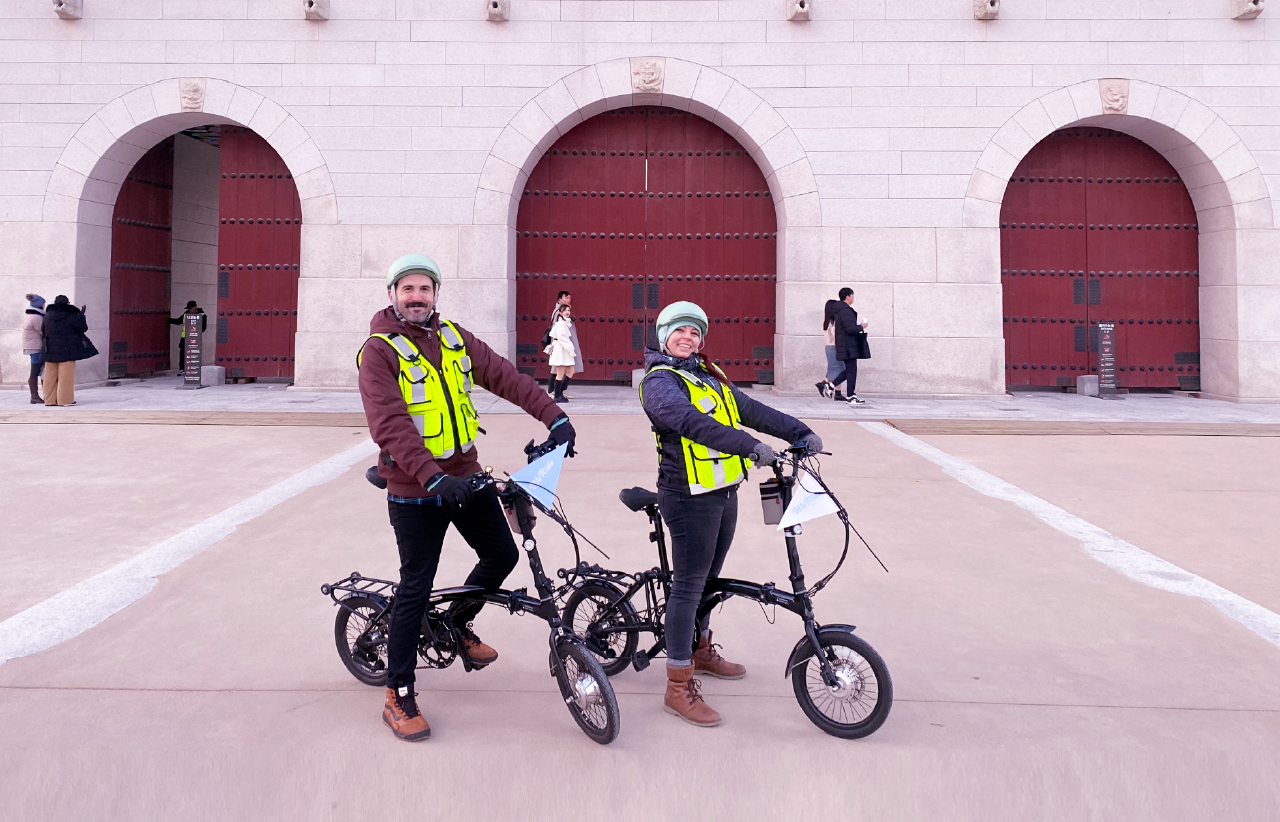
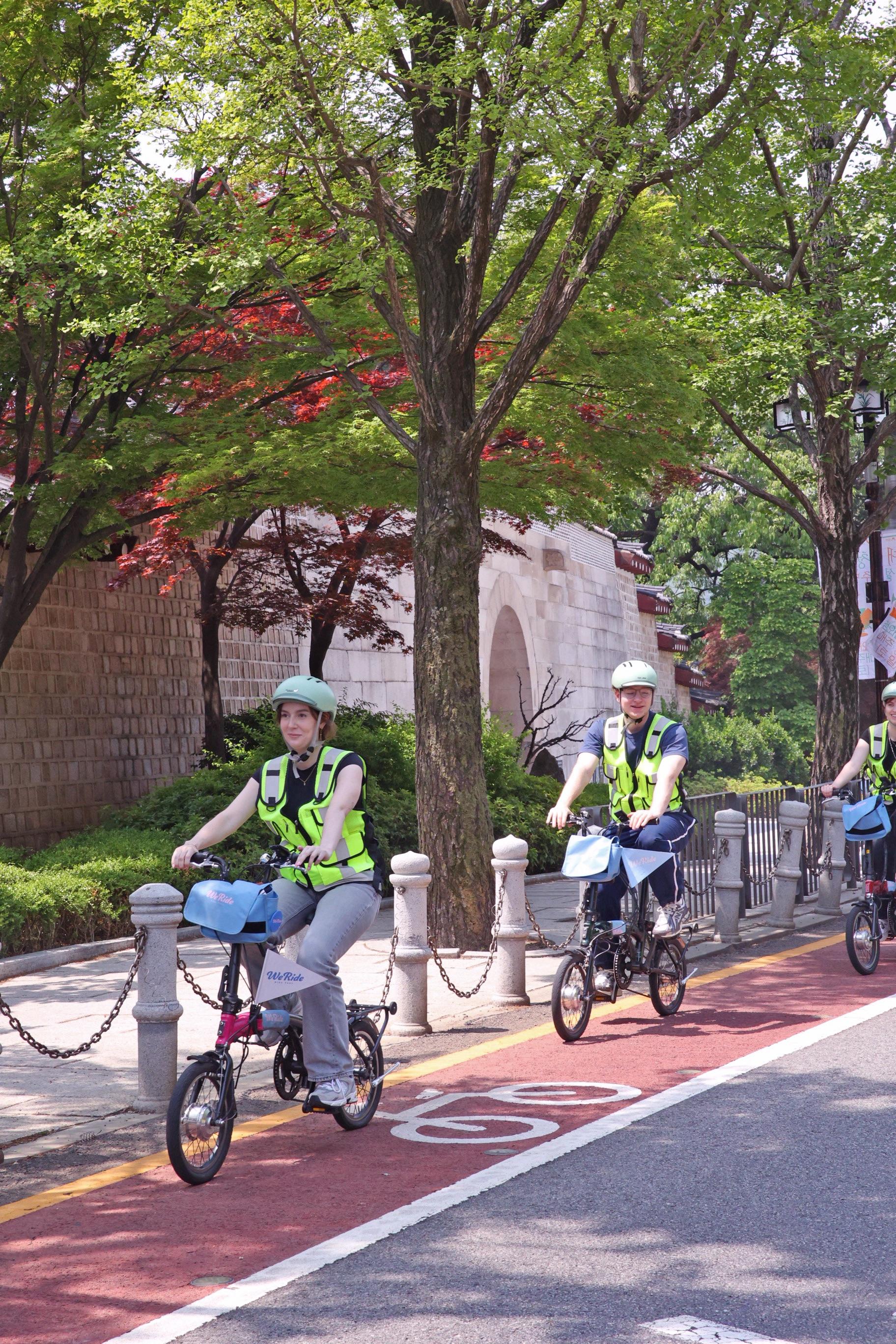
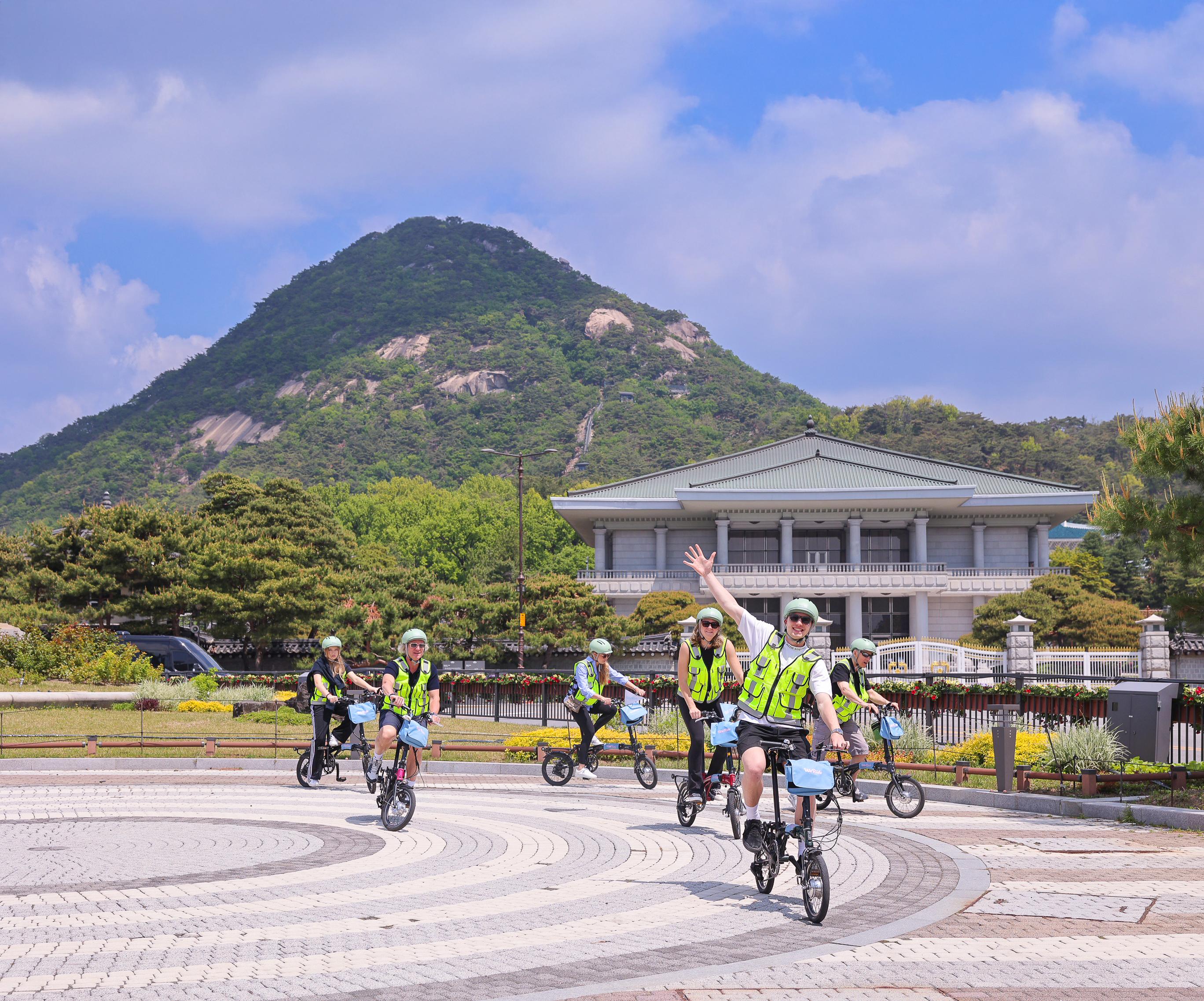
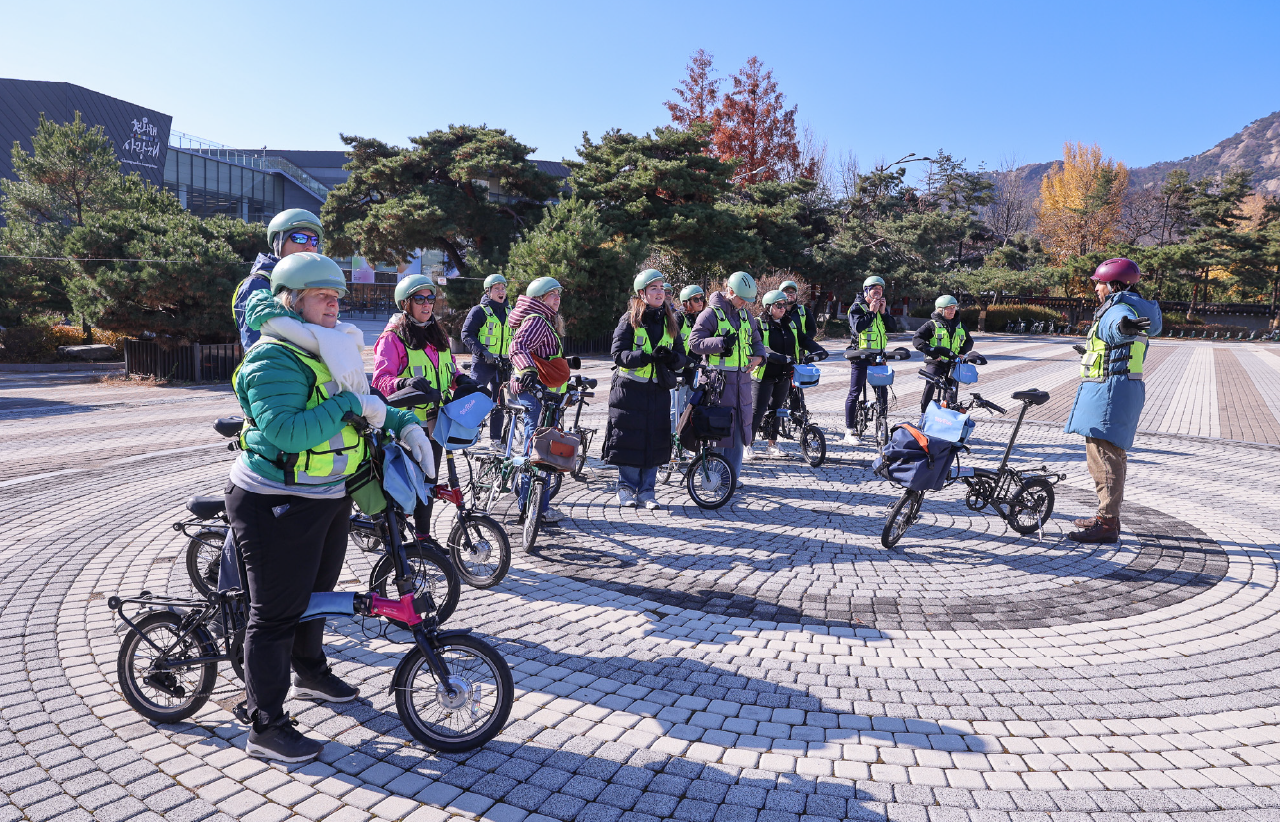
- Glide around Seoul on an E-bike with a local guide
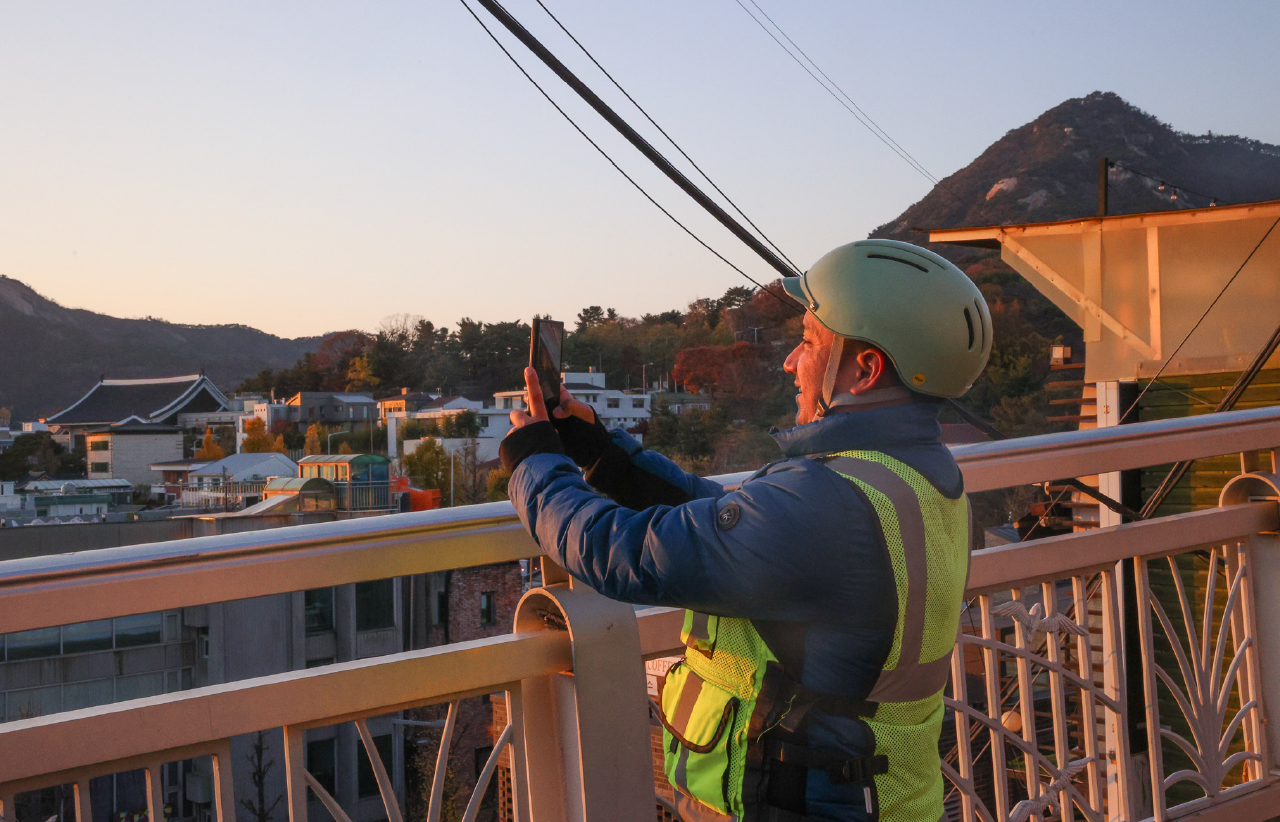
- Enjoy Seoul's natural beauty and epic skyline
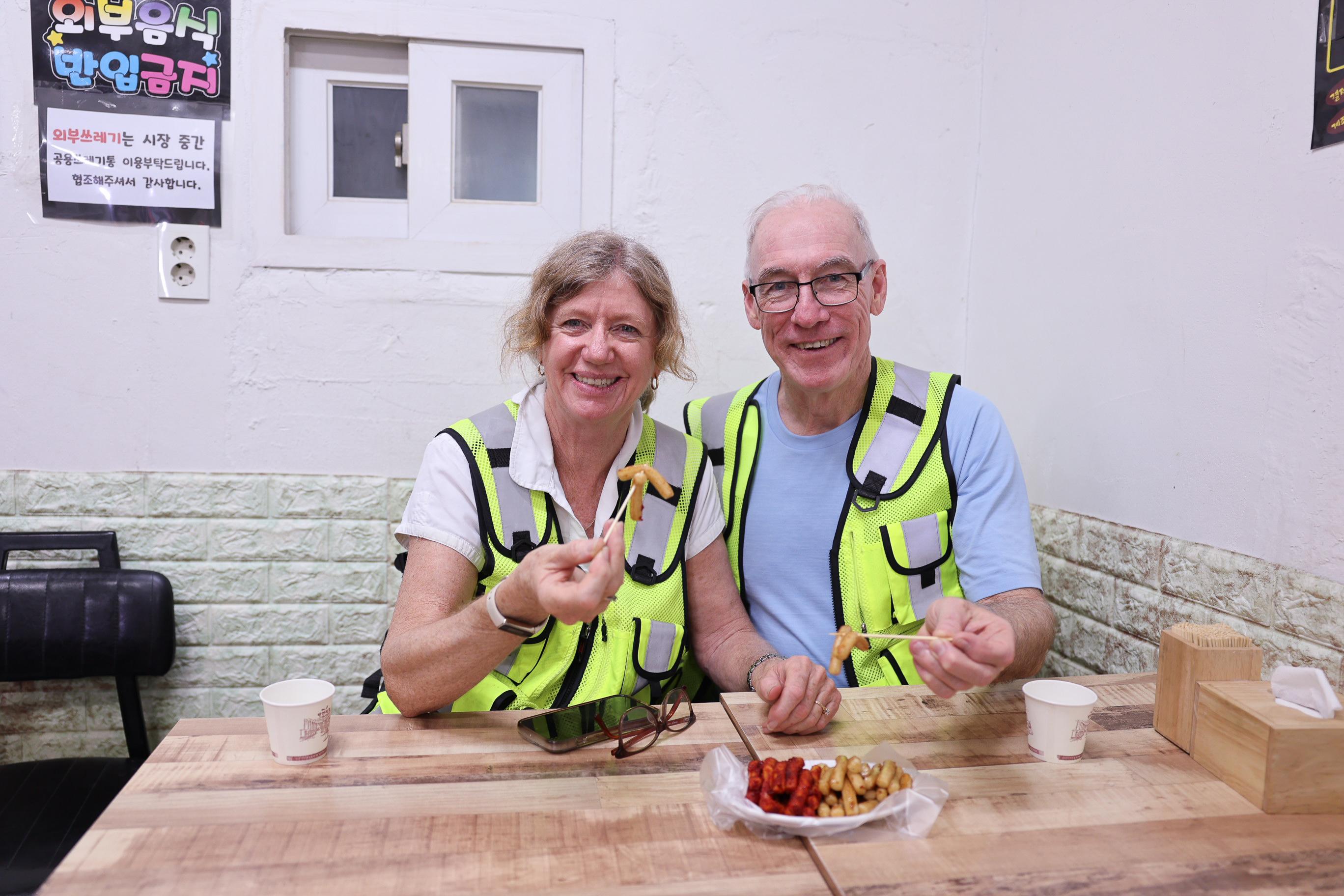
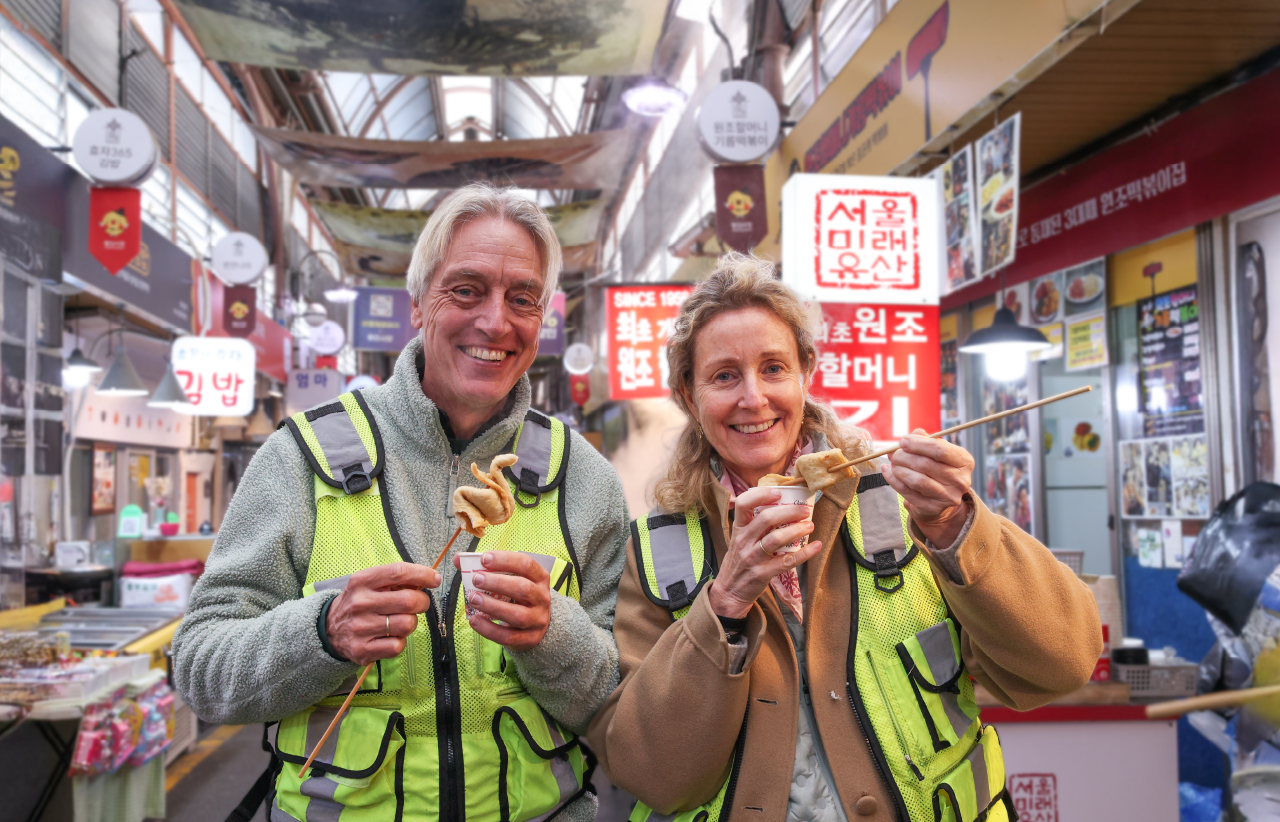
- Take your time and stop for some traditional Korean snacks
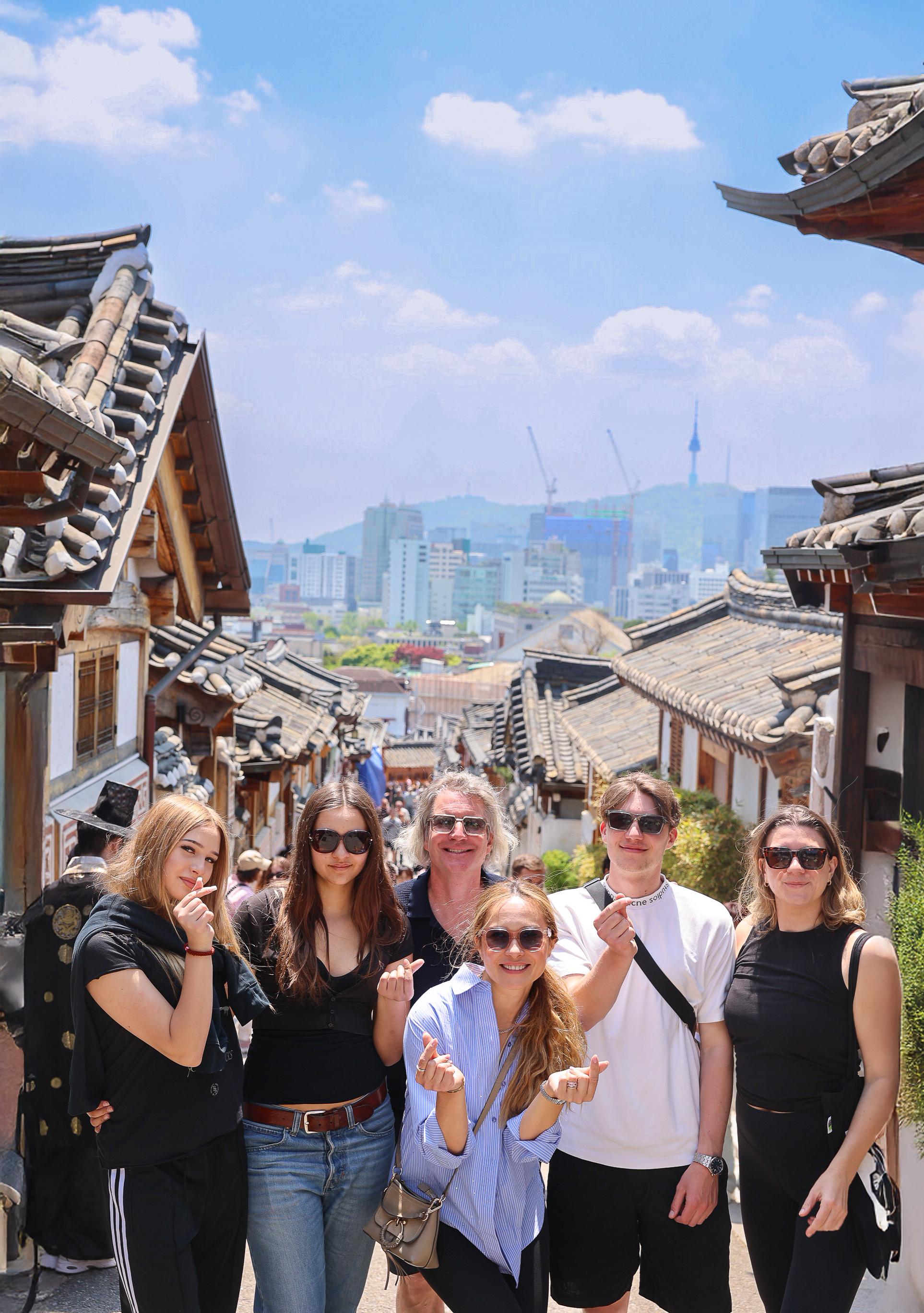
- Visit many beautiful places such as the romantic West Village
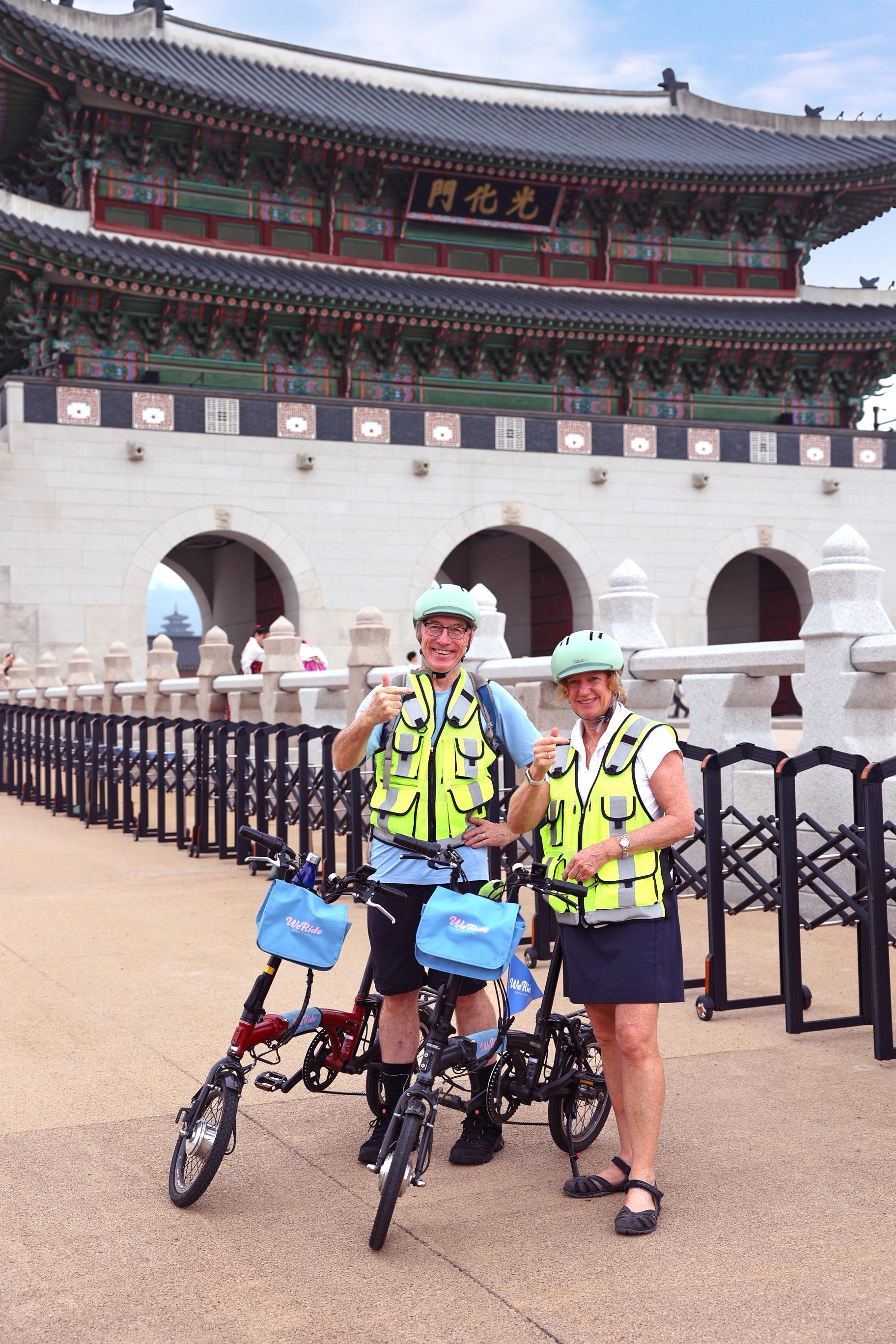
- See top tourist attractions and hidden gems such as the Royal Palace
What's Included
- E-Bike rental
- Safety helmet
- Professional local guide
- Insurance
- Mineral water
- Wifi and power bank during the ride
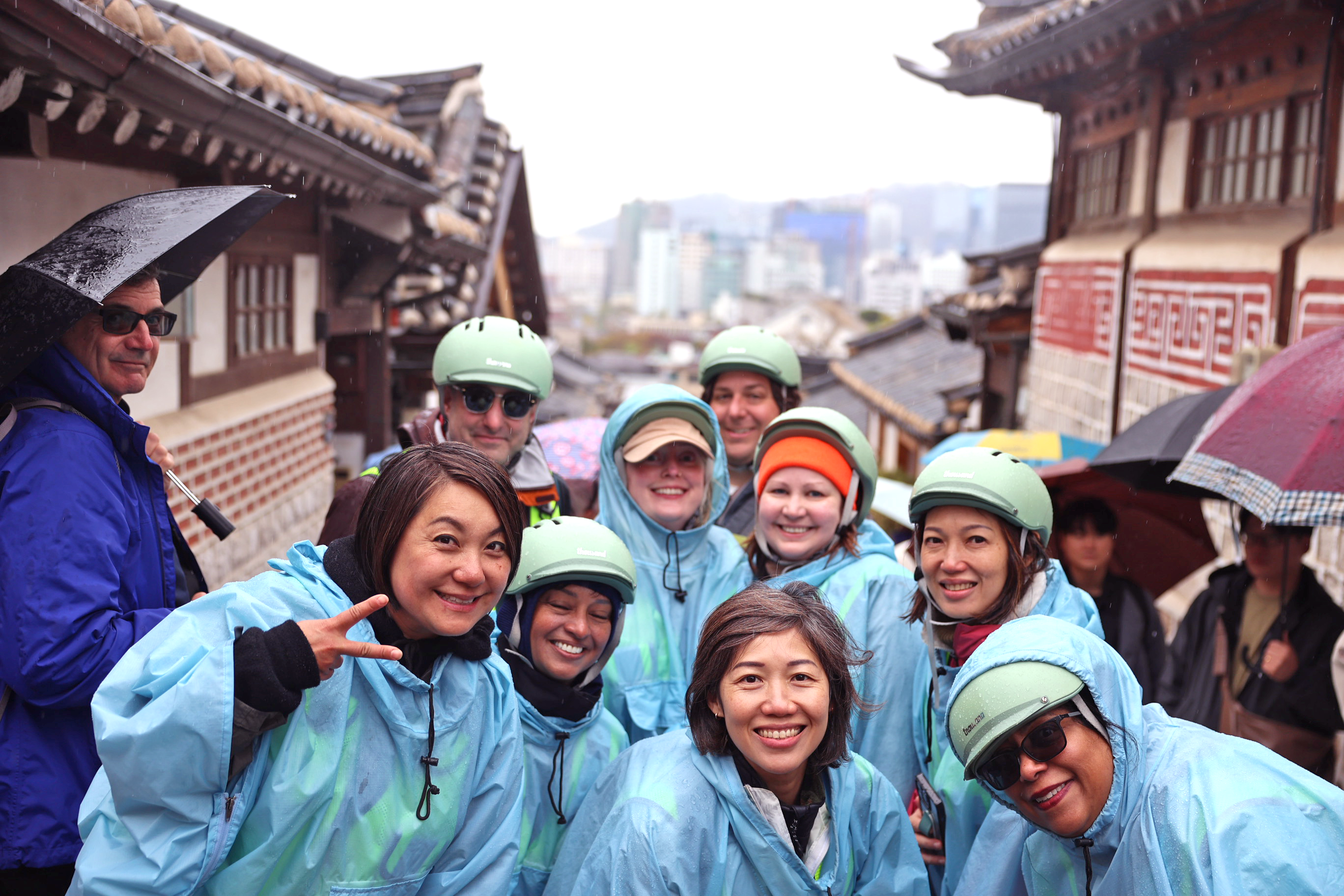
- Raincoat (if necessary)
Good to know: This tour takes place in most weather conditions; however, in extreme cases, you will be offered either a refund or an alternative date · Above-the-ankle socks must be worn during this activity · Customers under the influence of alcohol will not be allowed to participate in this activity · Not suitable for: Children under 13 years, Pregnant women, People who can't ride a bike, Wheelchair users
How a Seoul Cycling Day Works
Four steps, one law nobody enforces, and one that will catch you if you ride American-style.
Work Out Which Bike You Actually Want
A guided e-bike tour rides the city itself, hills included. Ttareungi, the public bike share, is a ₩1,000 day pass and a heavy single-speed — excellent on the flat riverside, hard work anywhere else. A Gangchon rail bike is a pedal cart on a disused railway 85 km outside Seoul, and is not cycling in any useful sense.
Check the Air Before the Weather
Fine dust is a real planning variable here, not a footnote. In March 2026, 13 of the month's first 23 days saw at least one Seoul district hit the 'bad' threshold for PM2.5 — roughly every second day — and Seoul restricts its own outdoor programmes when dust warnings are issued. Check AirKorea, the national monitoring app. On a bad day the dust peaks between 10:00 and noon and thins by mid-afternoon.
Know Which E-Bike Is Legal Here
This is the rule visitors from the US, Canada and China get wrong. In Korea an e-bike counts as a bicycle only if it is pedal-assist, cuts out at 25 km/h and weighs under 30 kg. A throttle model is personal mobility instead — licence, age 16 and a helmet — and it is banned from the bike paths outright once it passes those limits. Rental and tour bikes are compliant — the trap is assuming your home rules travel with you.
Bring Lights, and Decide About the Helmet
Lights are legally required after dark and the riverside is busy at night. Helmets have been legally mandatory for all cyclists since September 2018 — and the Ministry of the Interior and Safety said before the law took effect that it had no plan to enforce or punish non-wearing. It remains unenforced and almost universally ignored. Ttareungi supplies none. Your call, made with the facts.
Photo Gallery
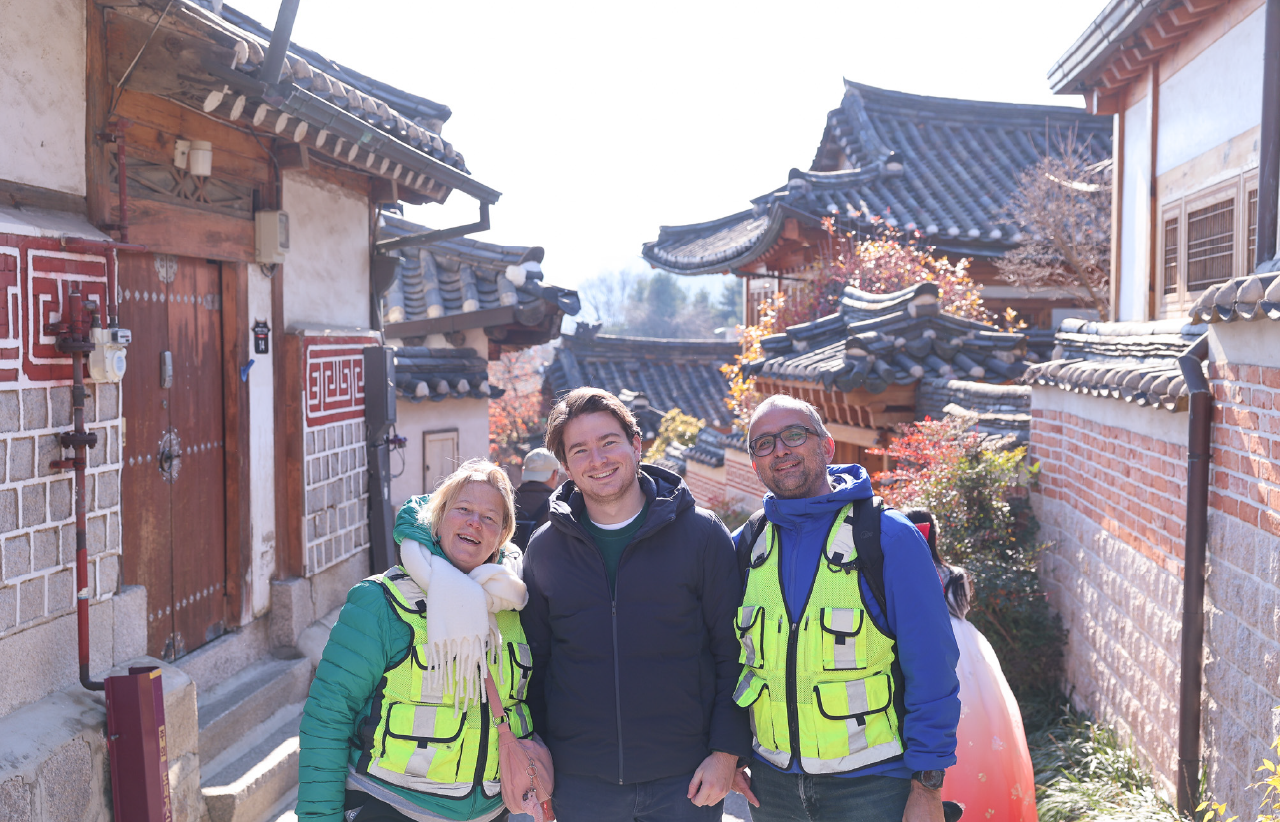
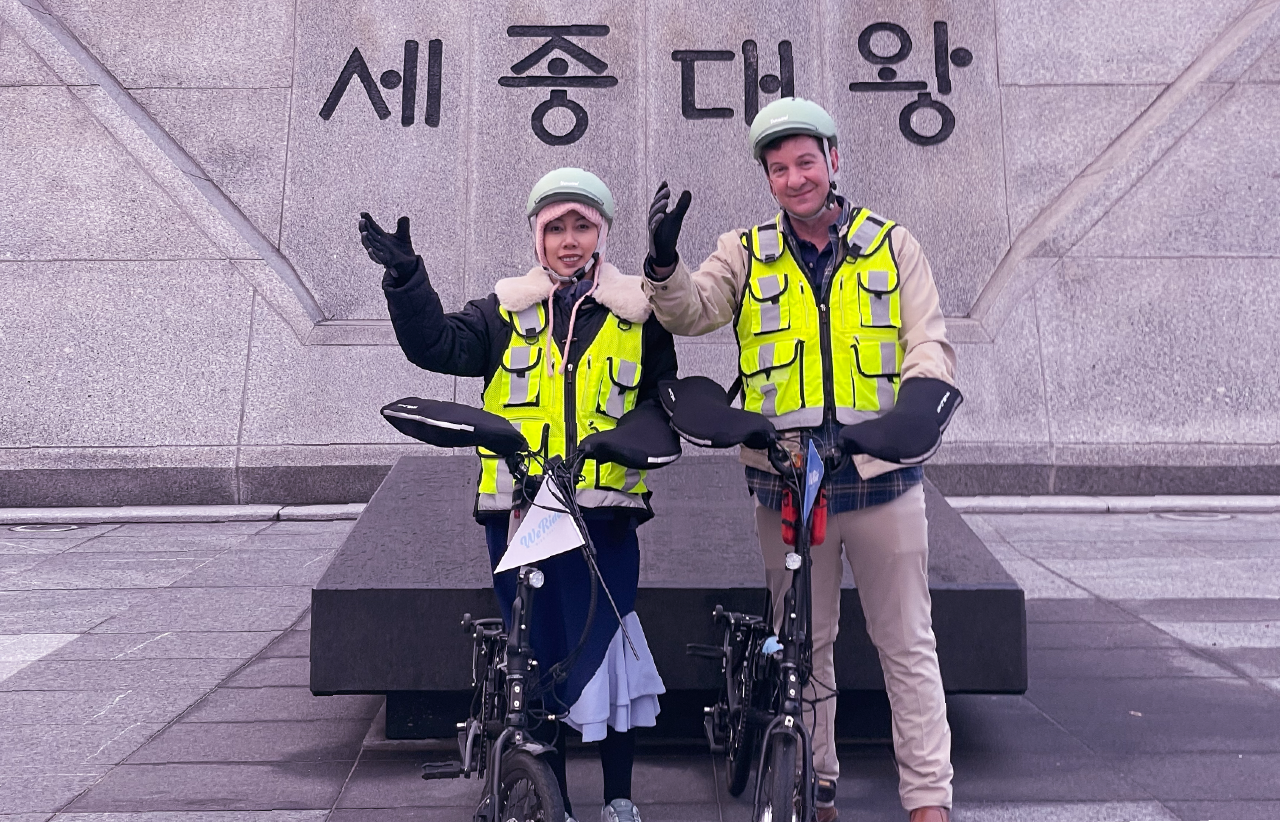
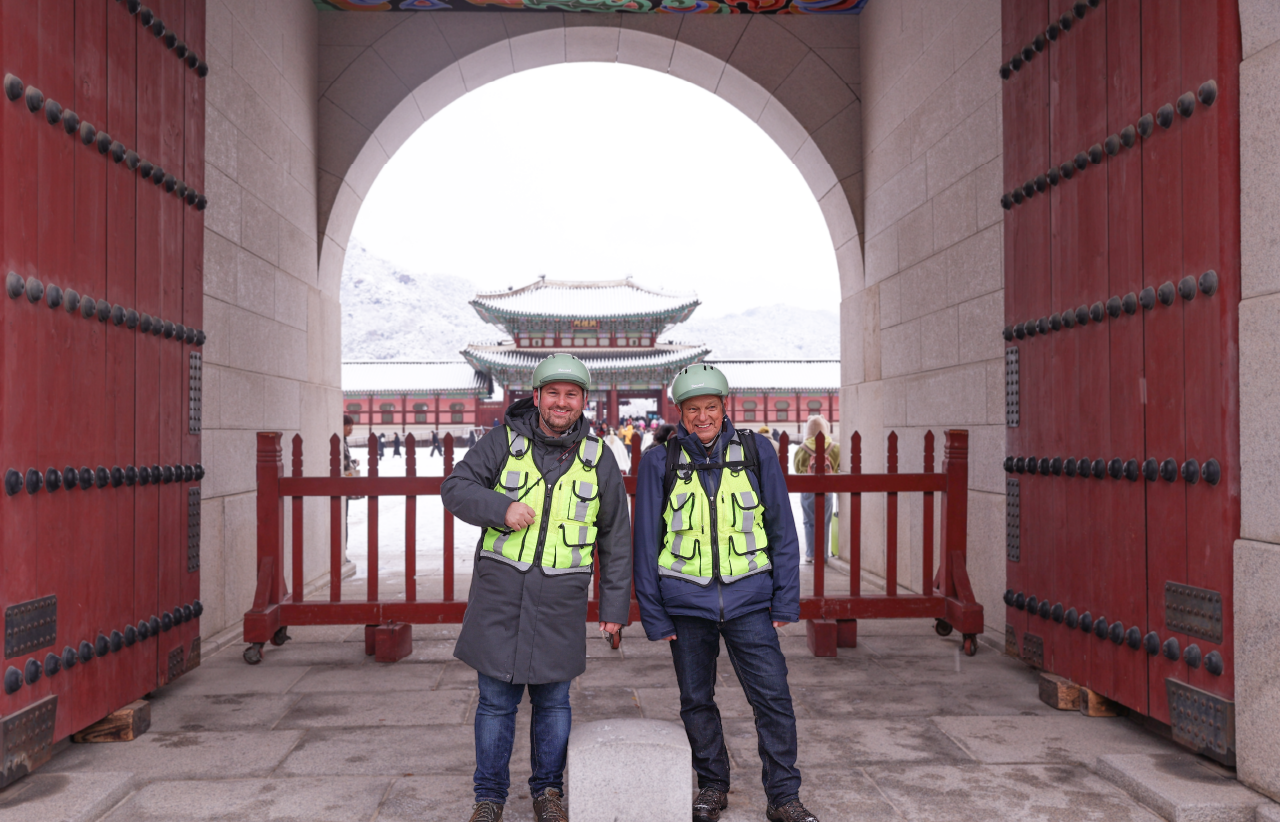
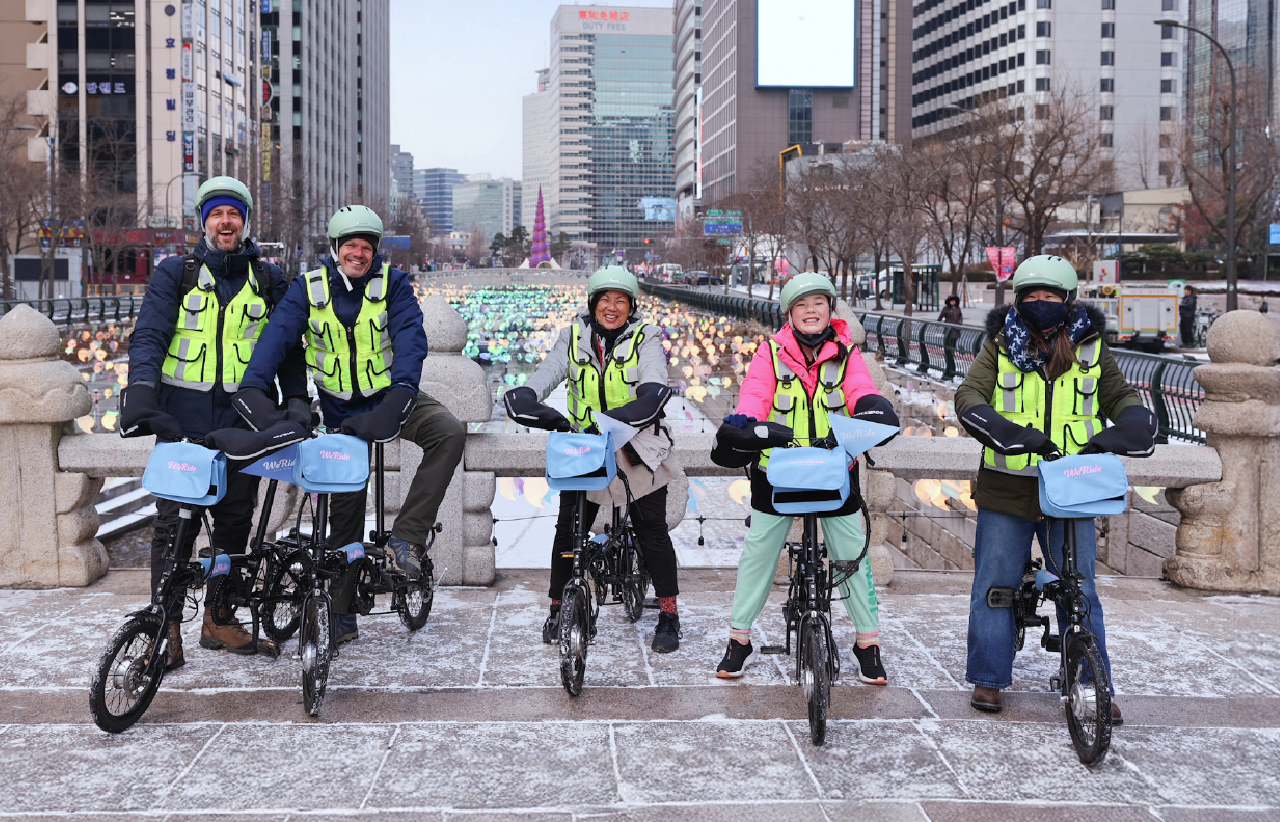
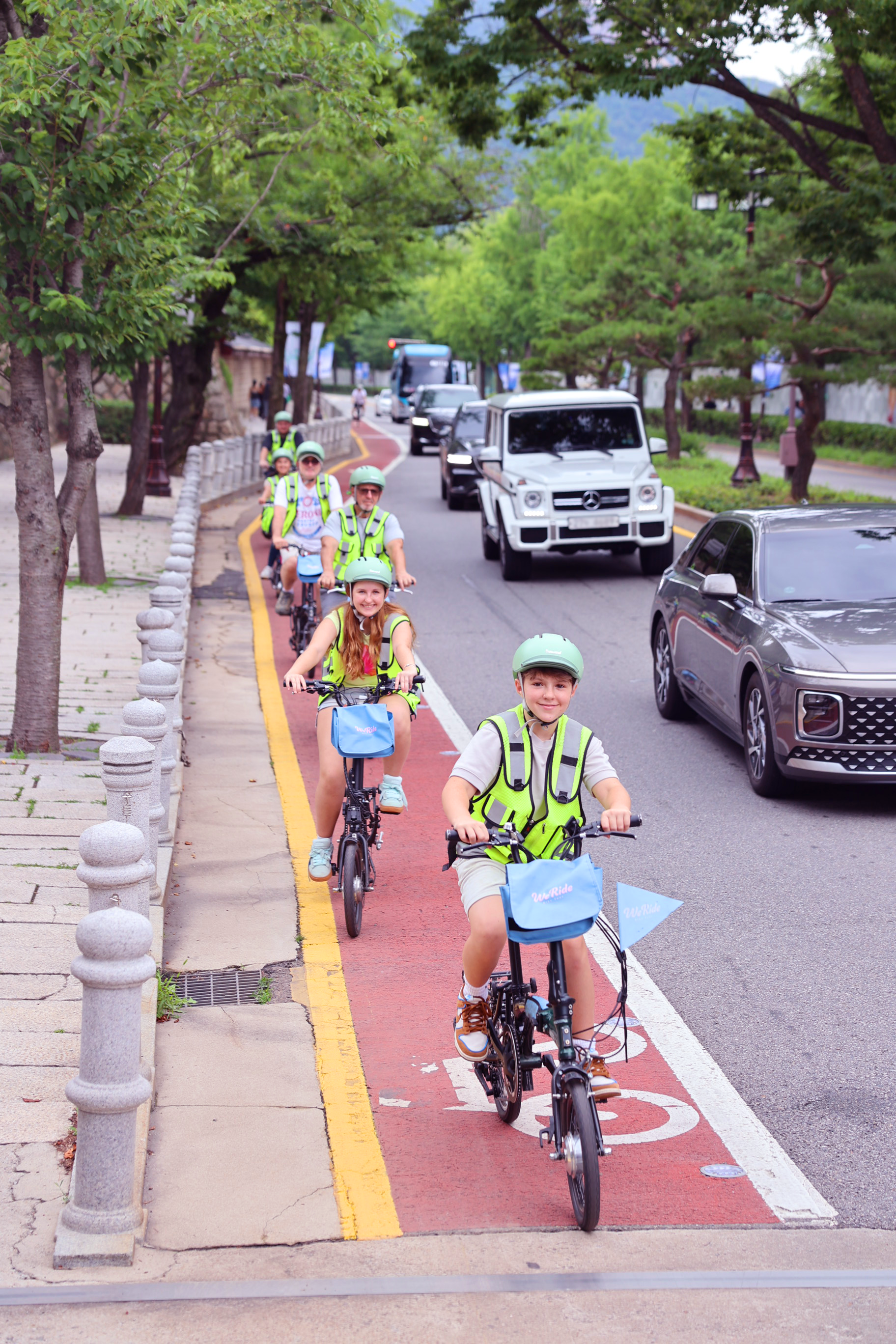
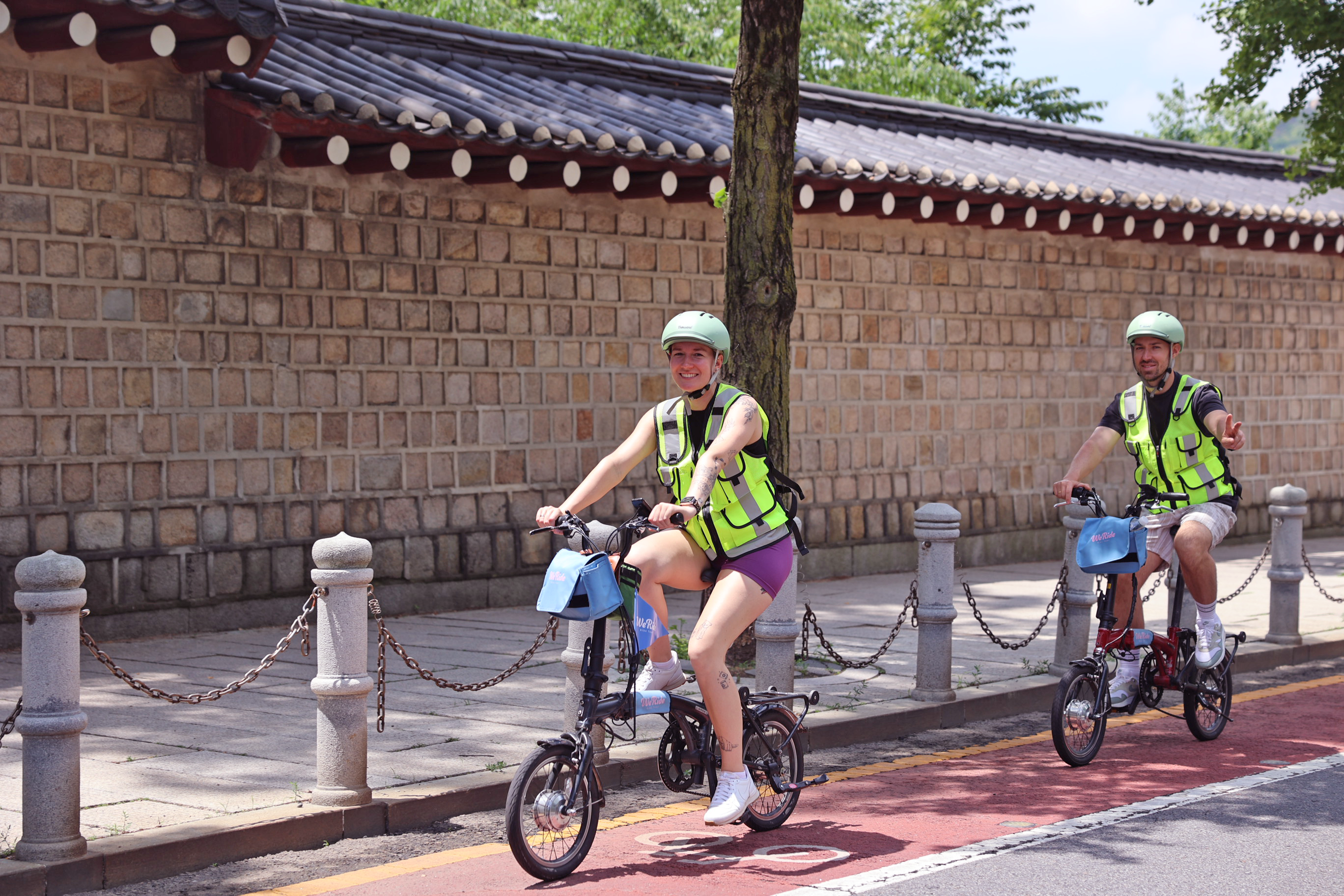
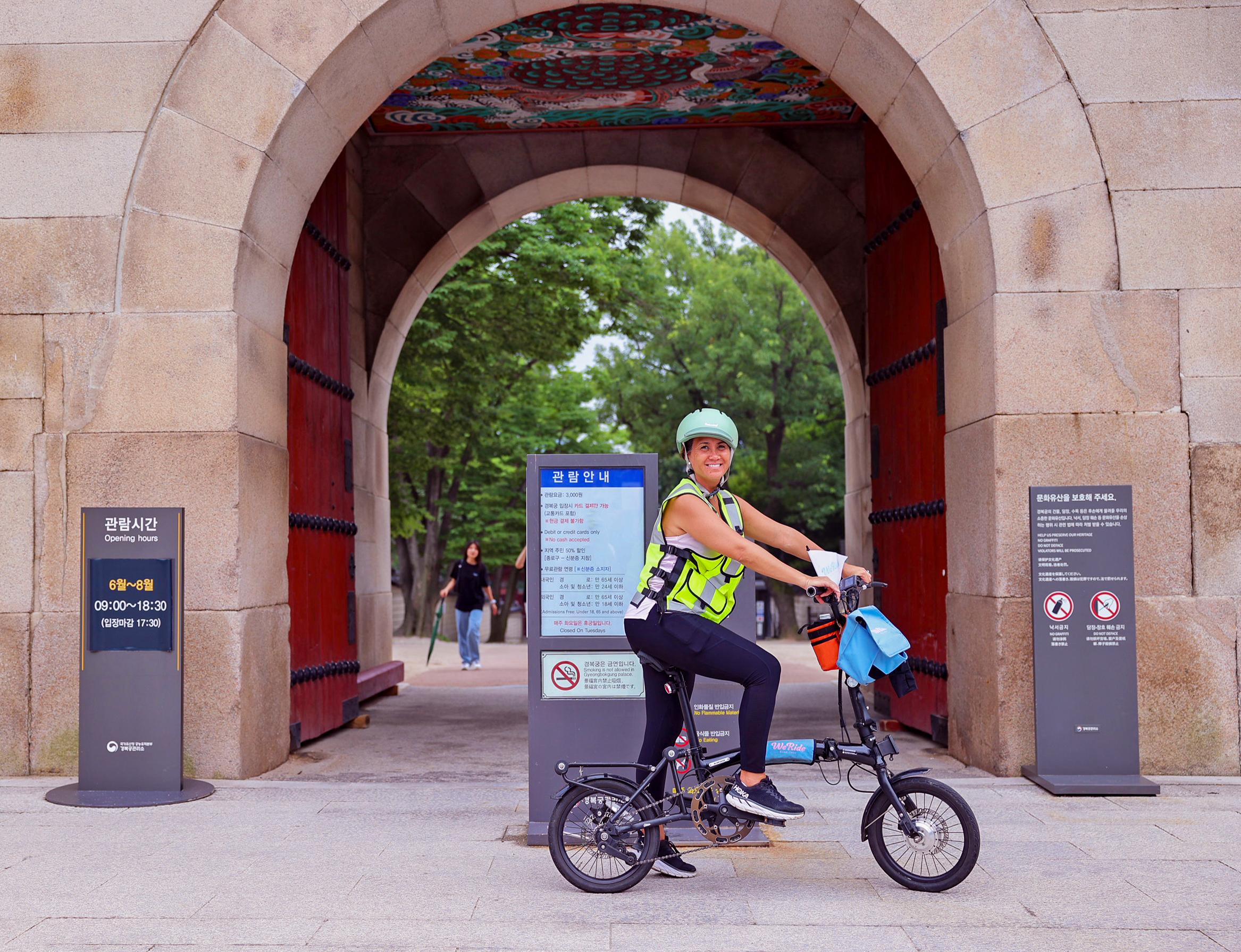
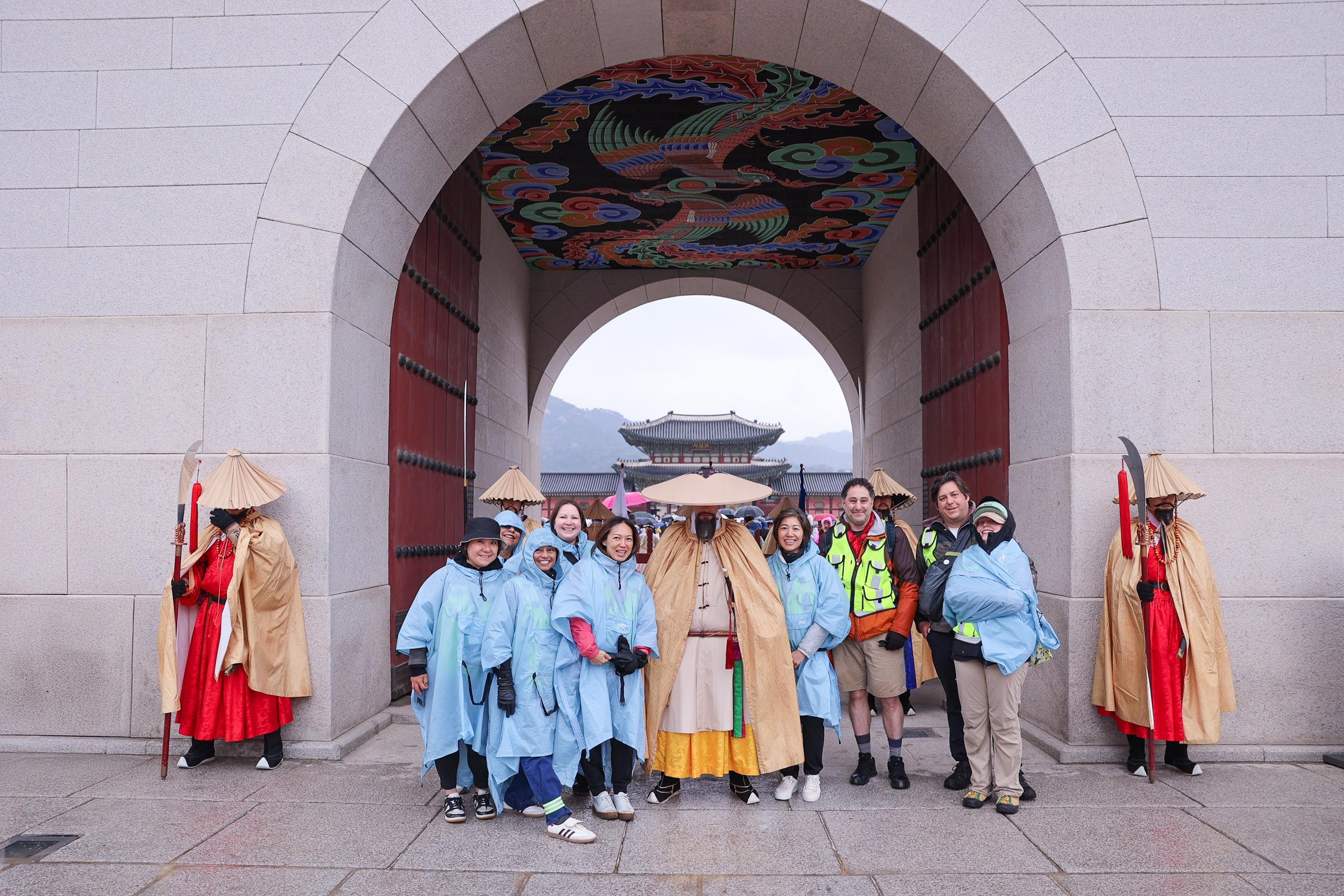
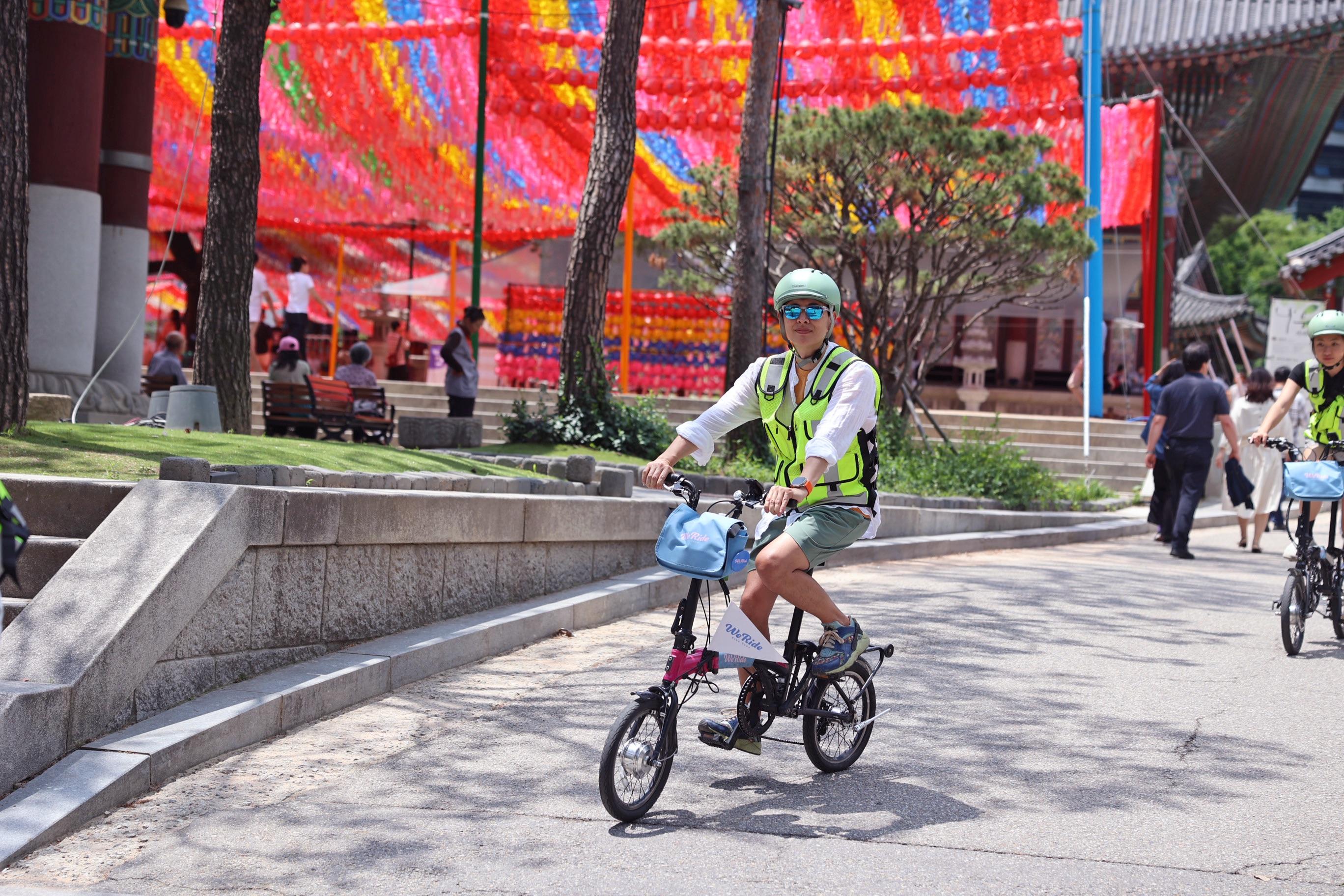
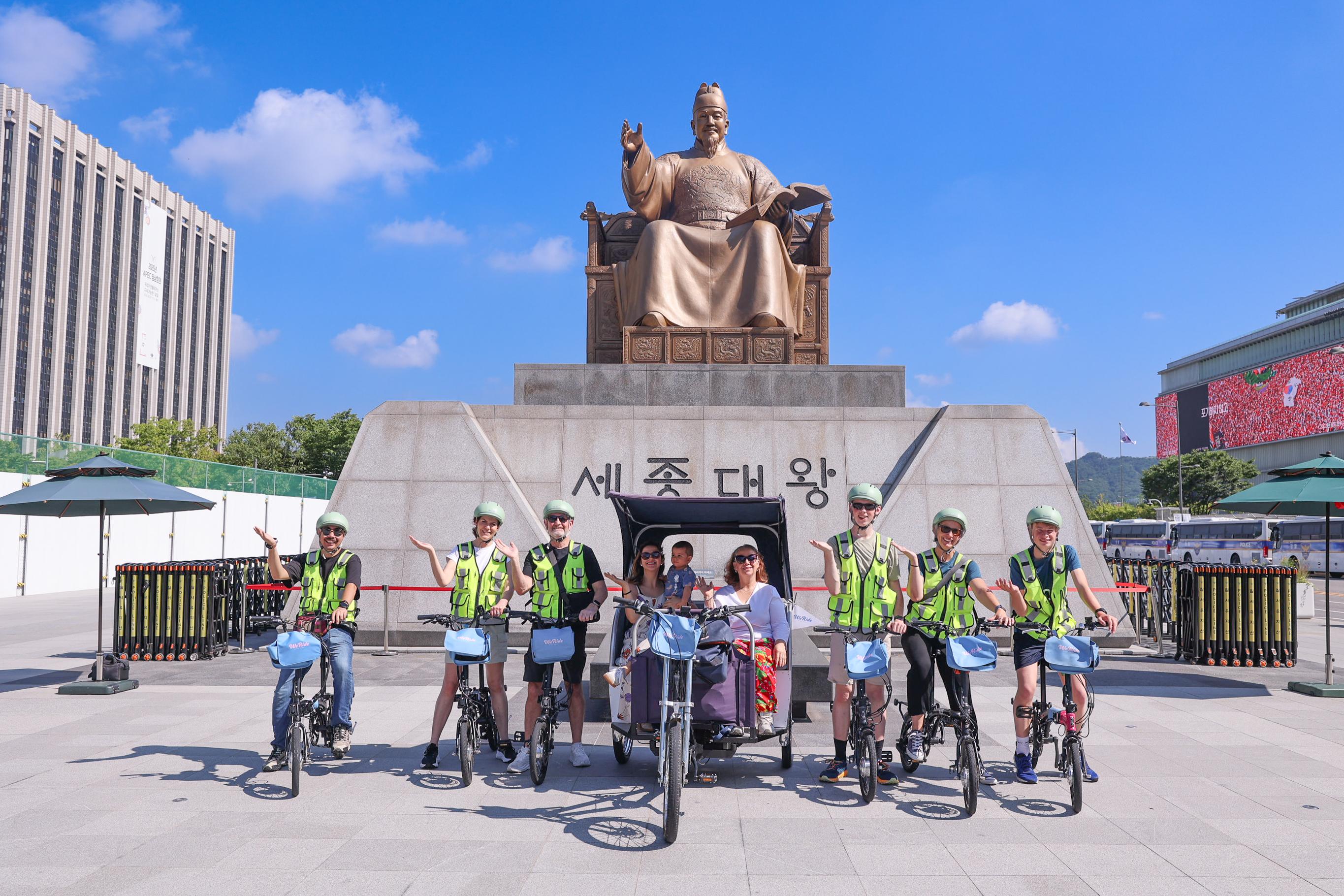
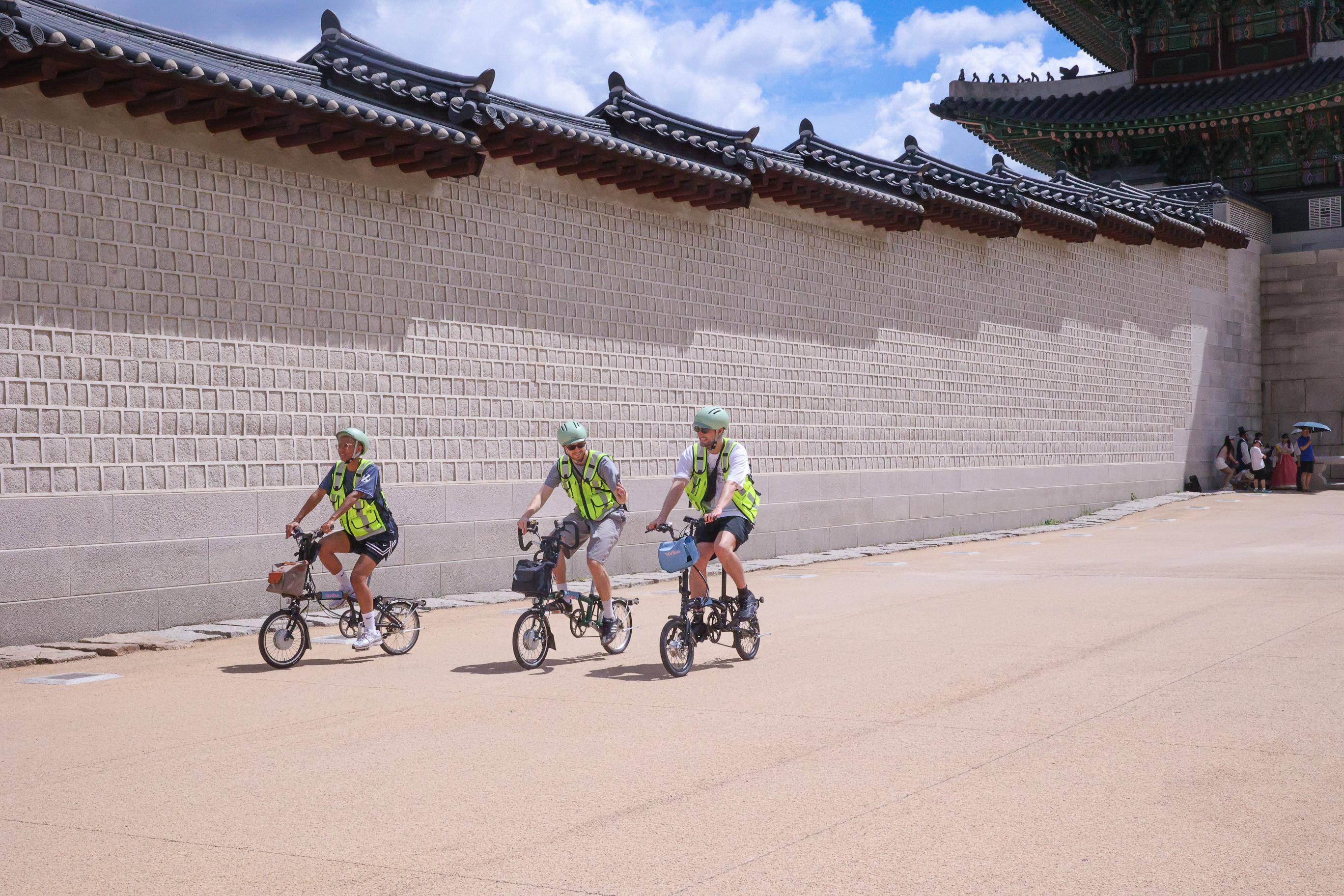
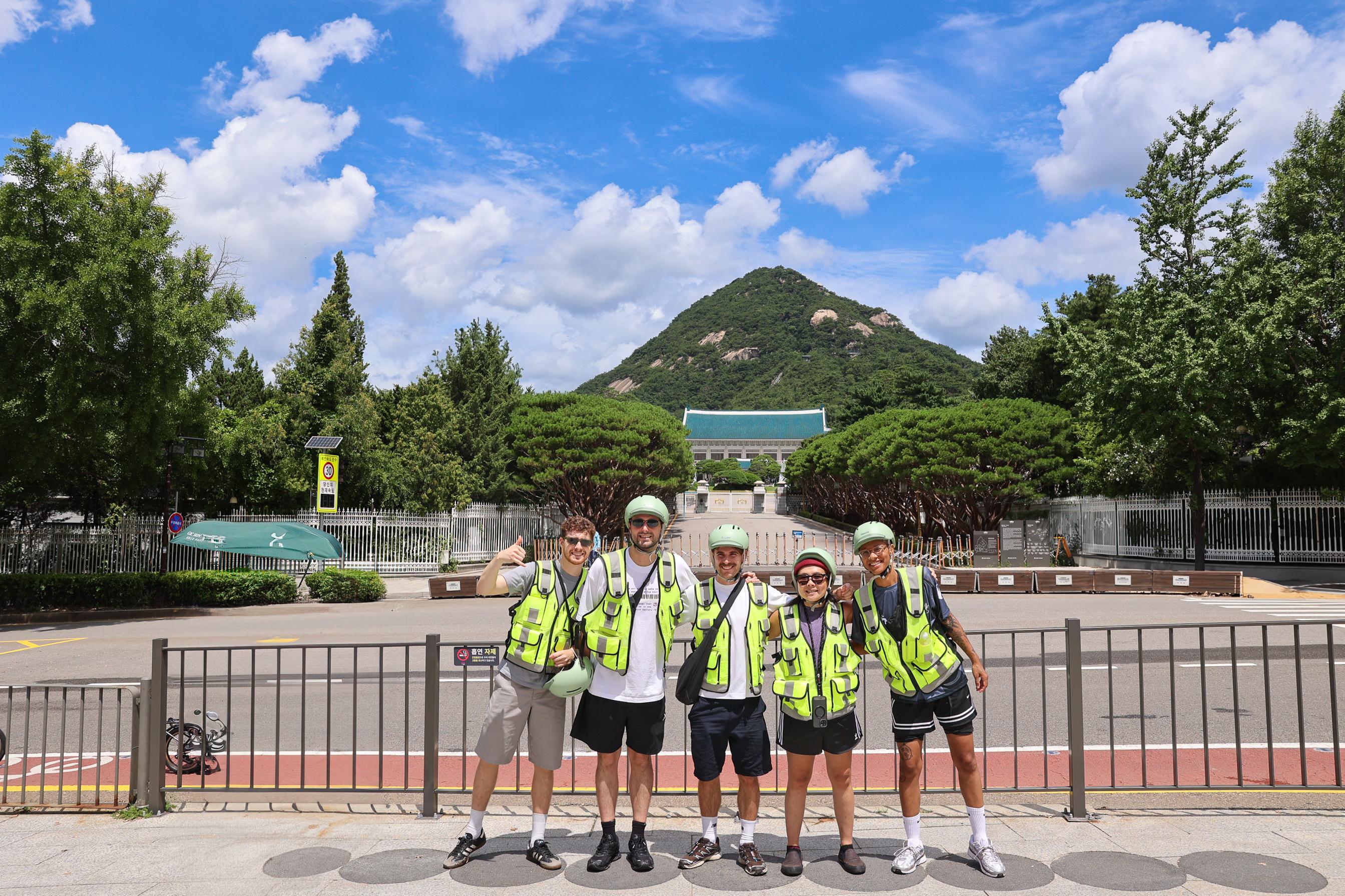
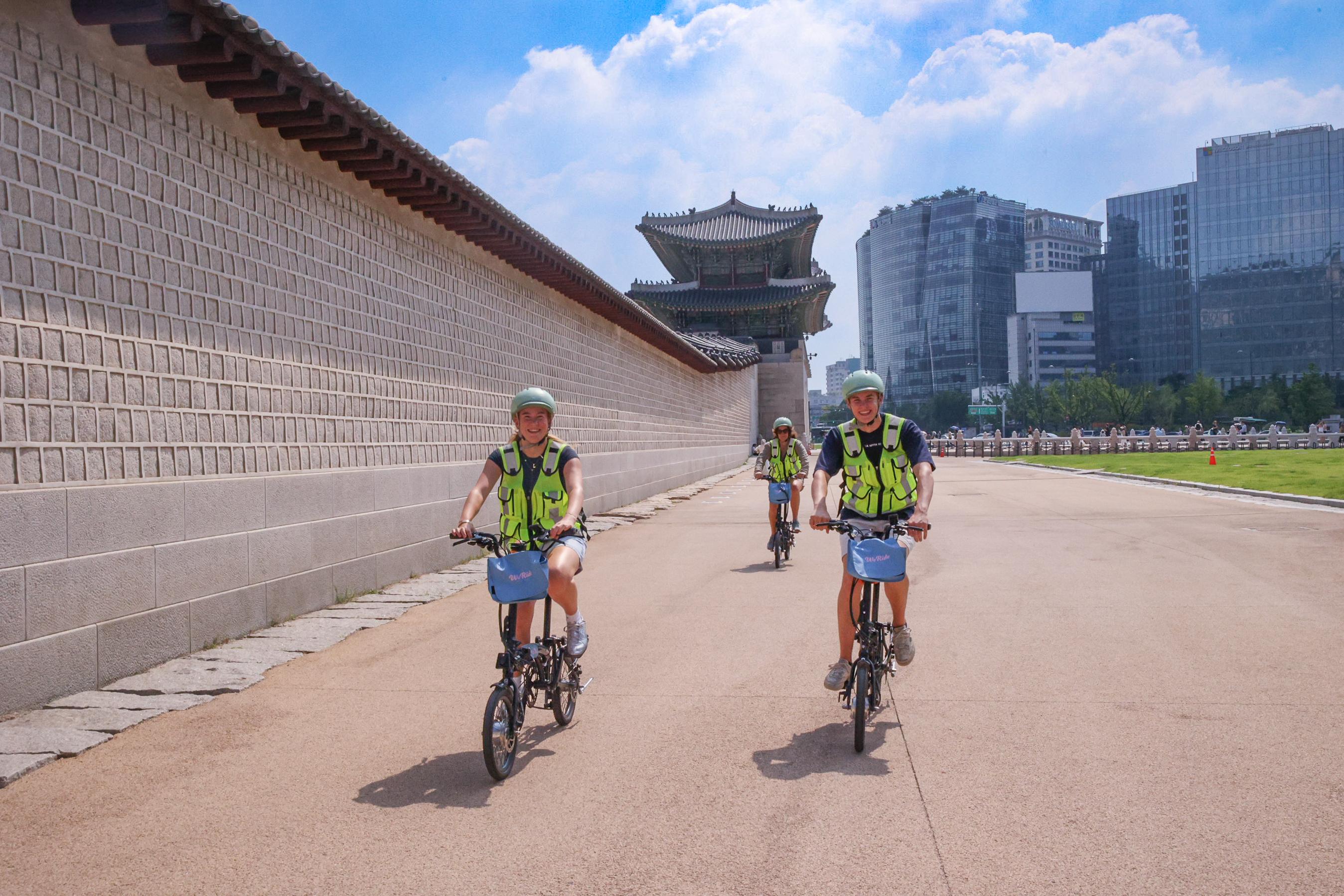
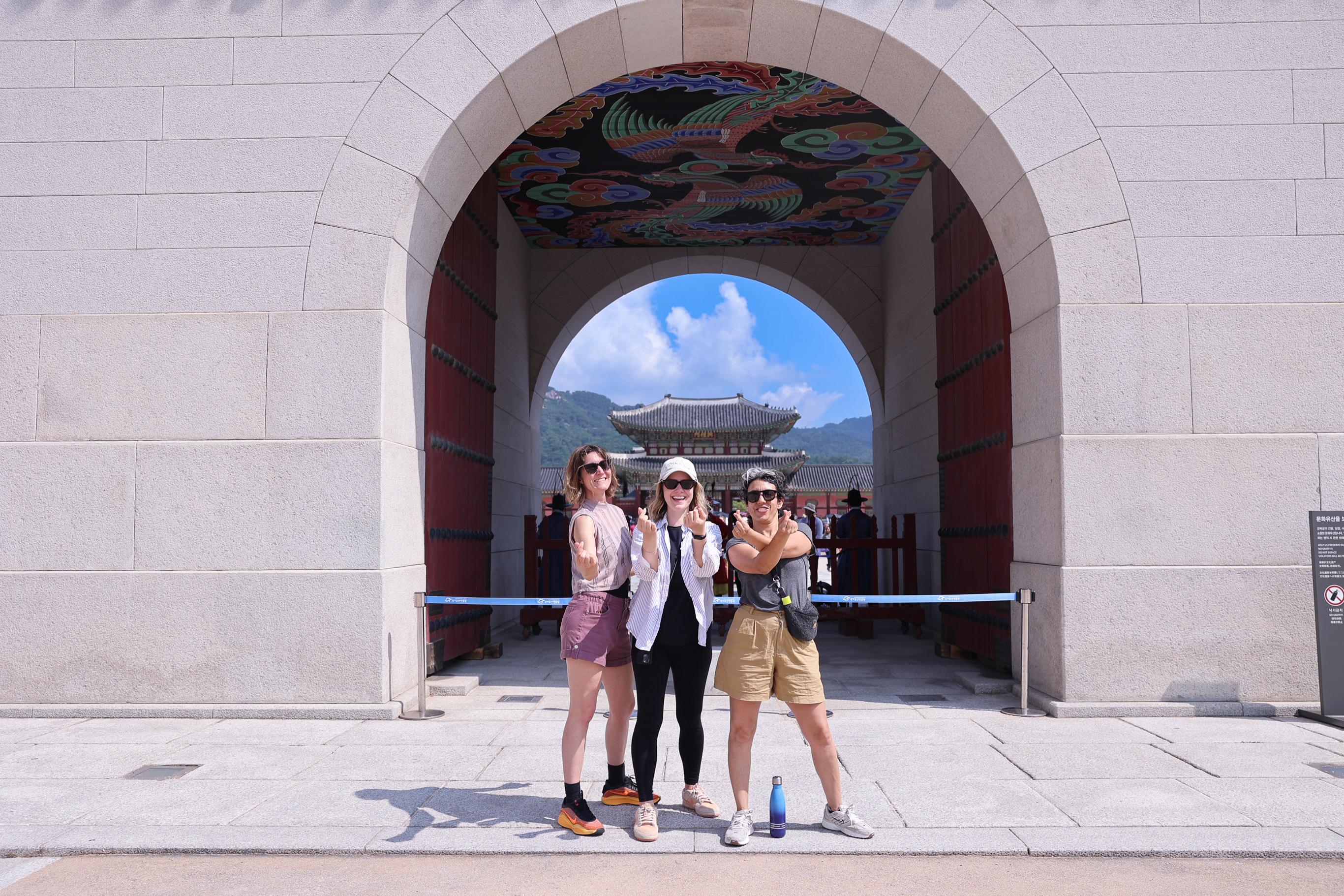
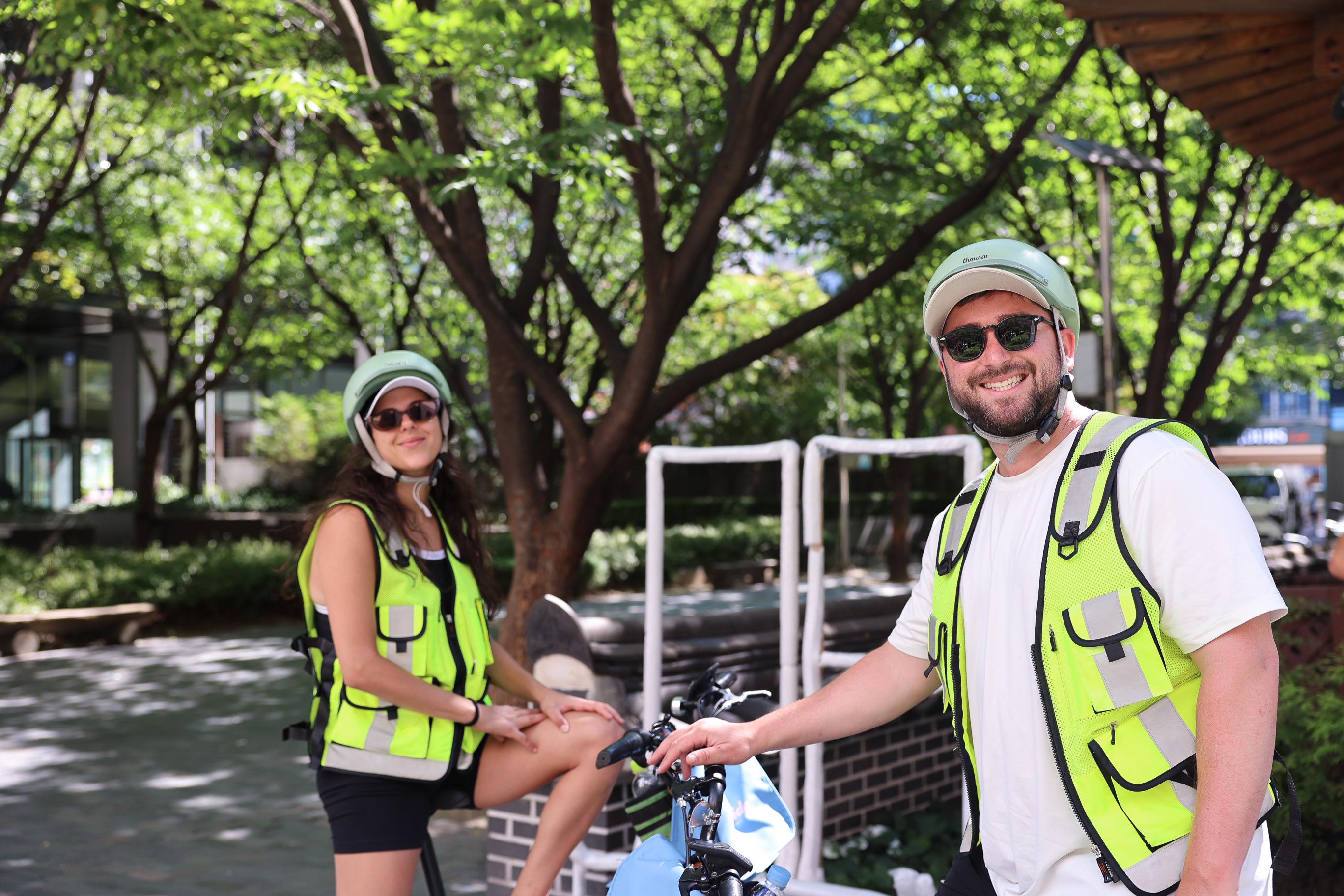
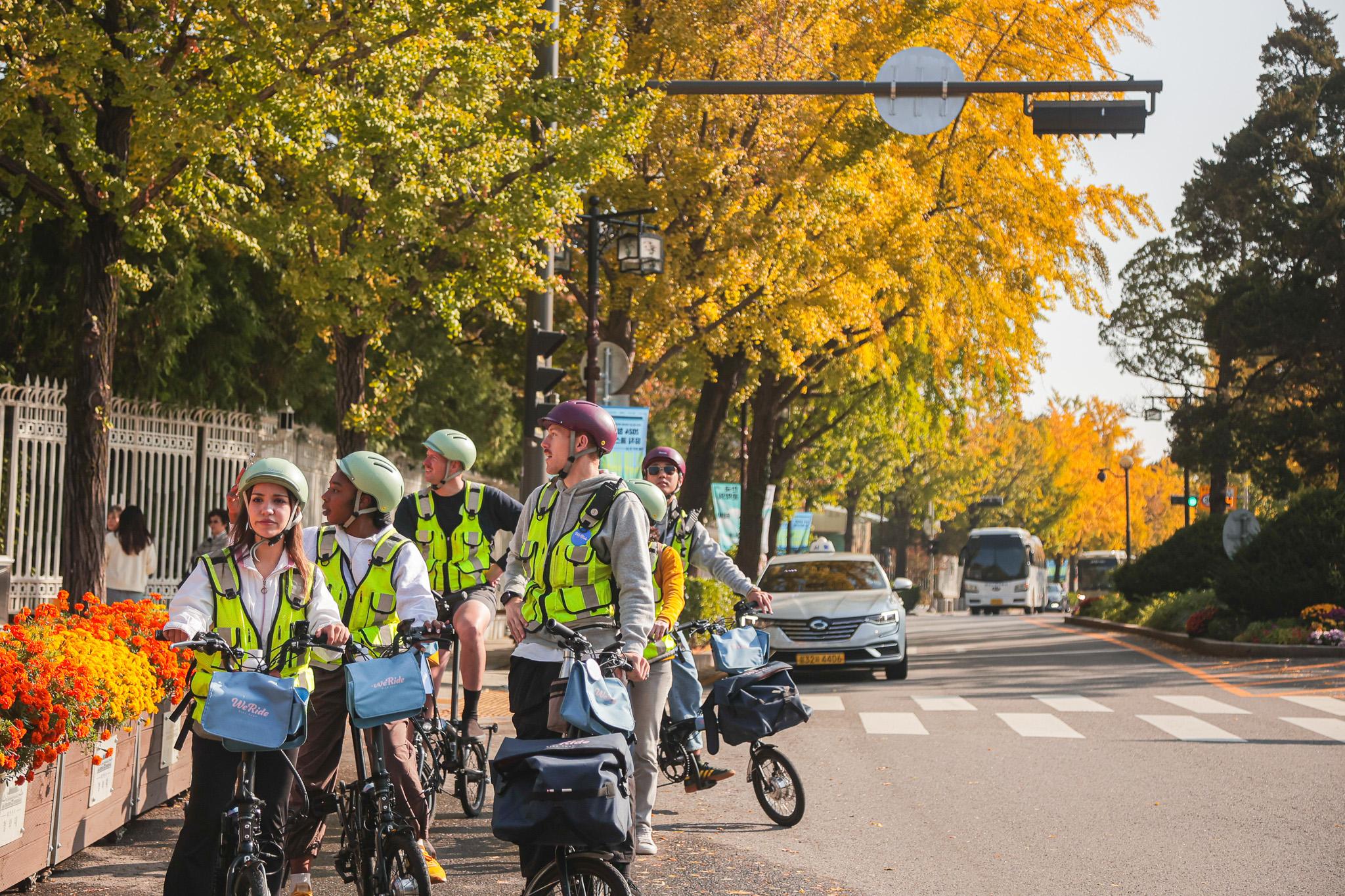
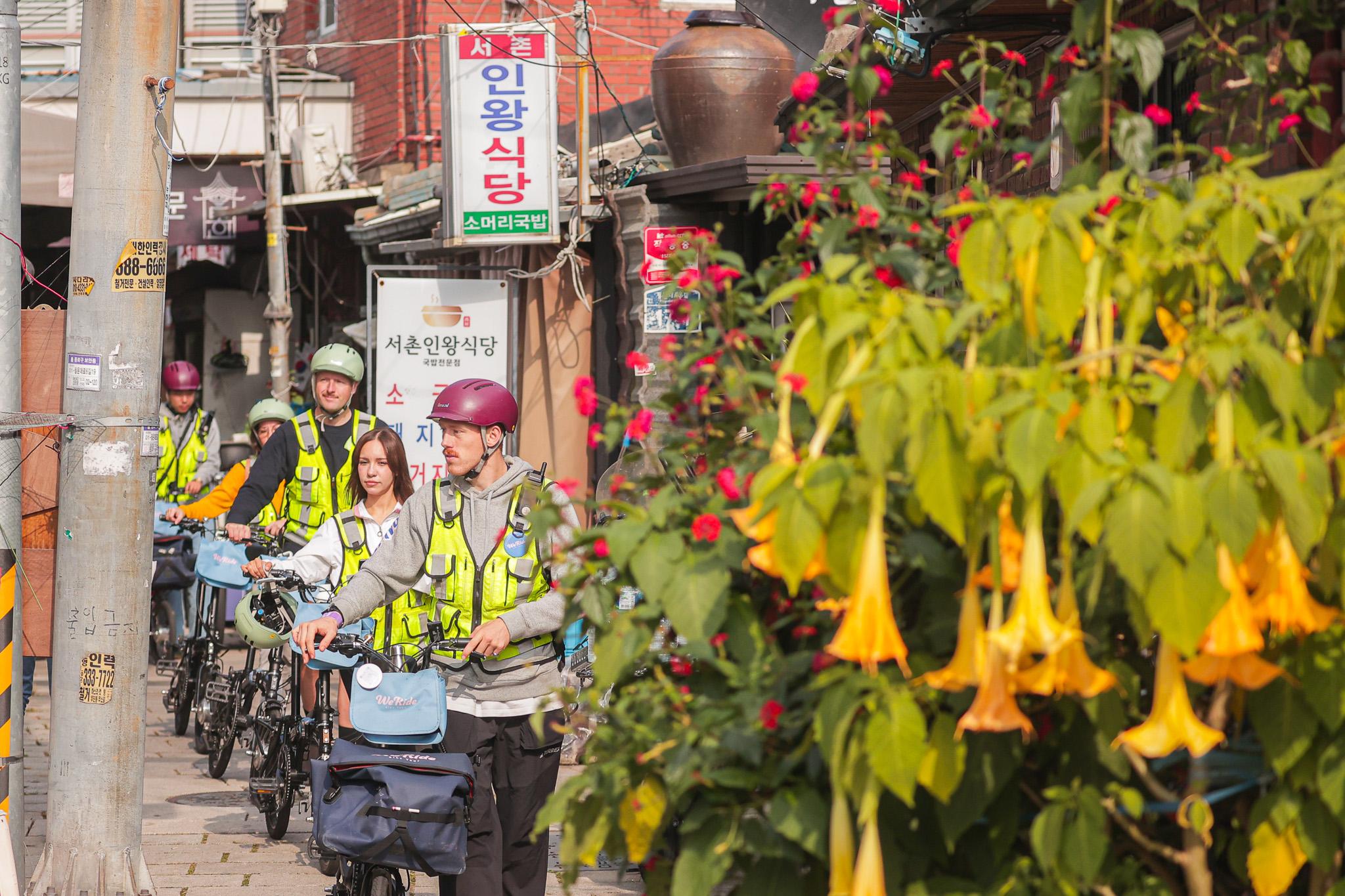
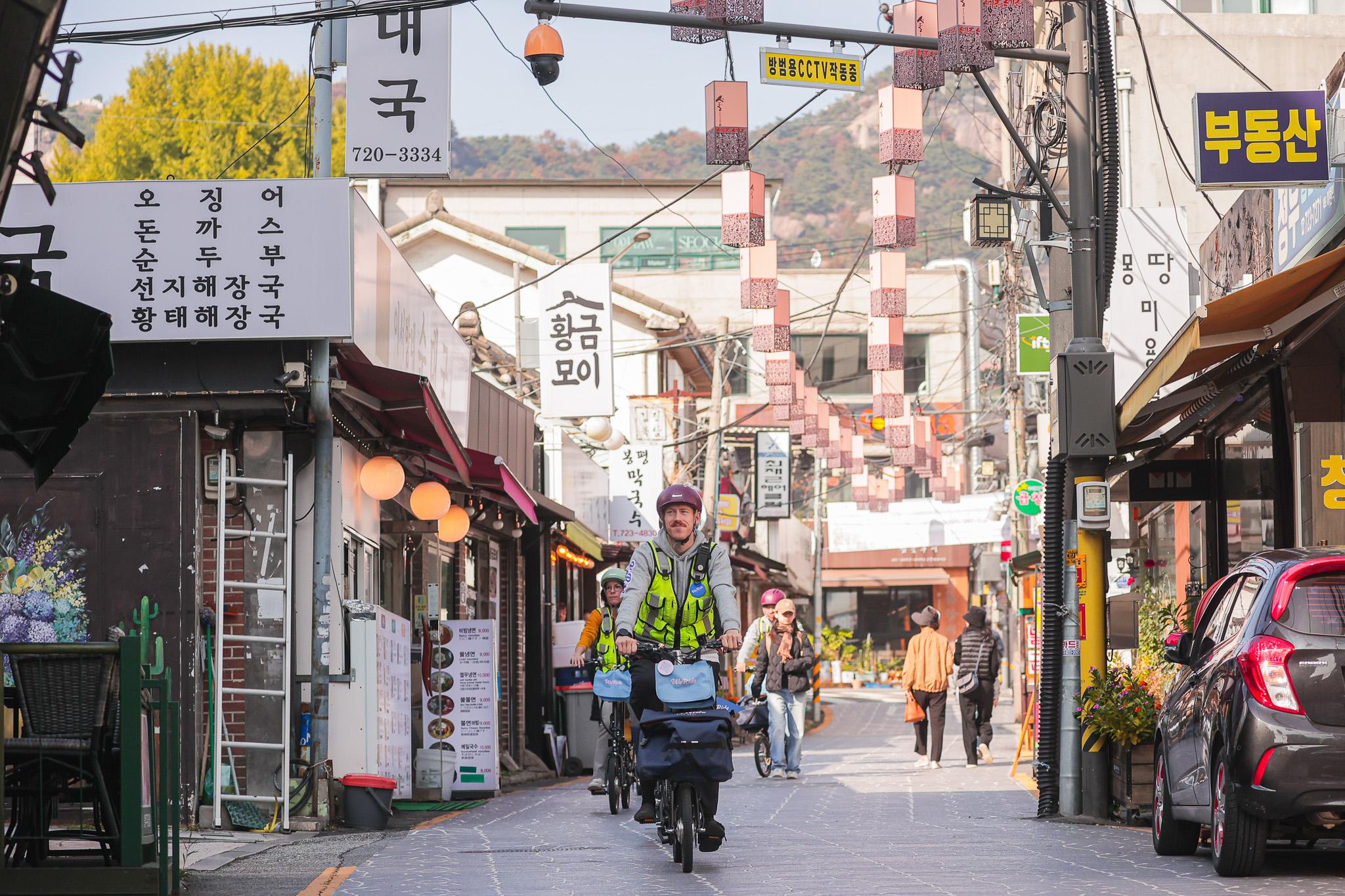
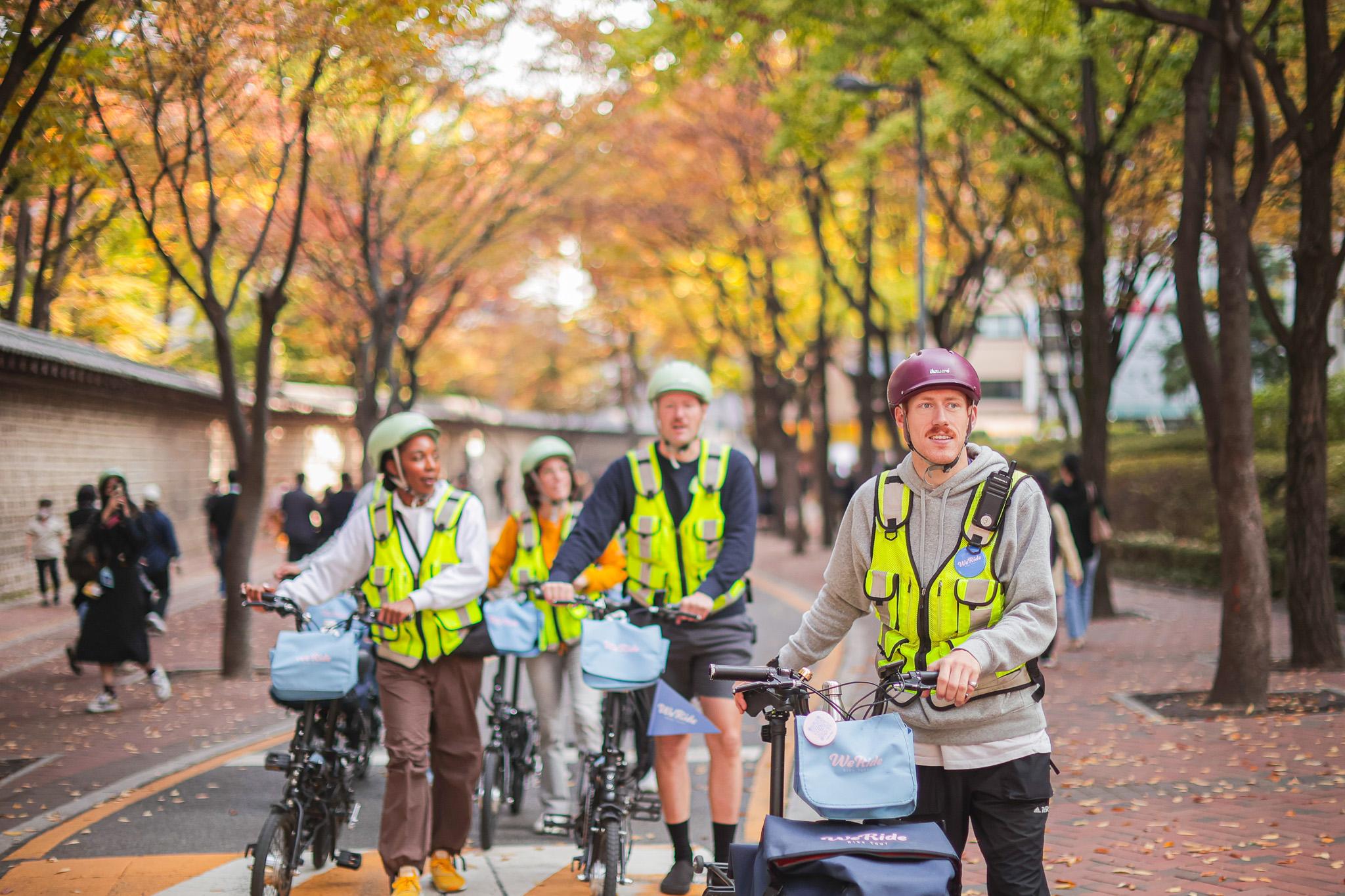
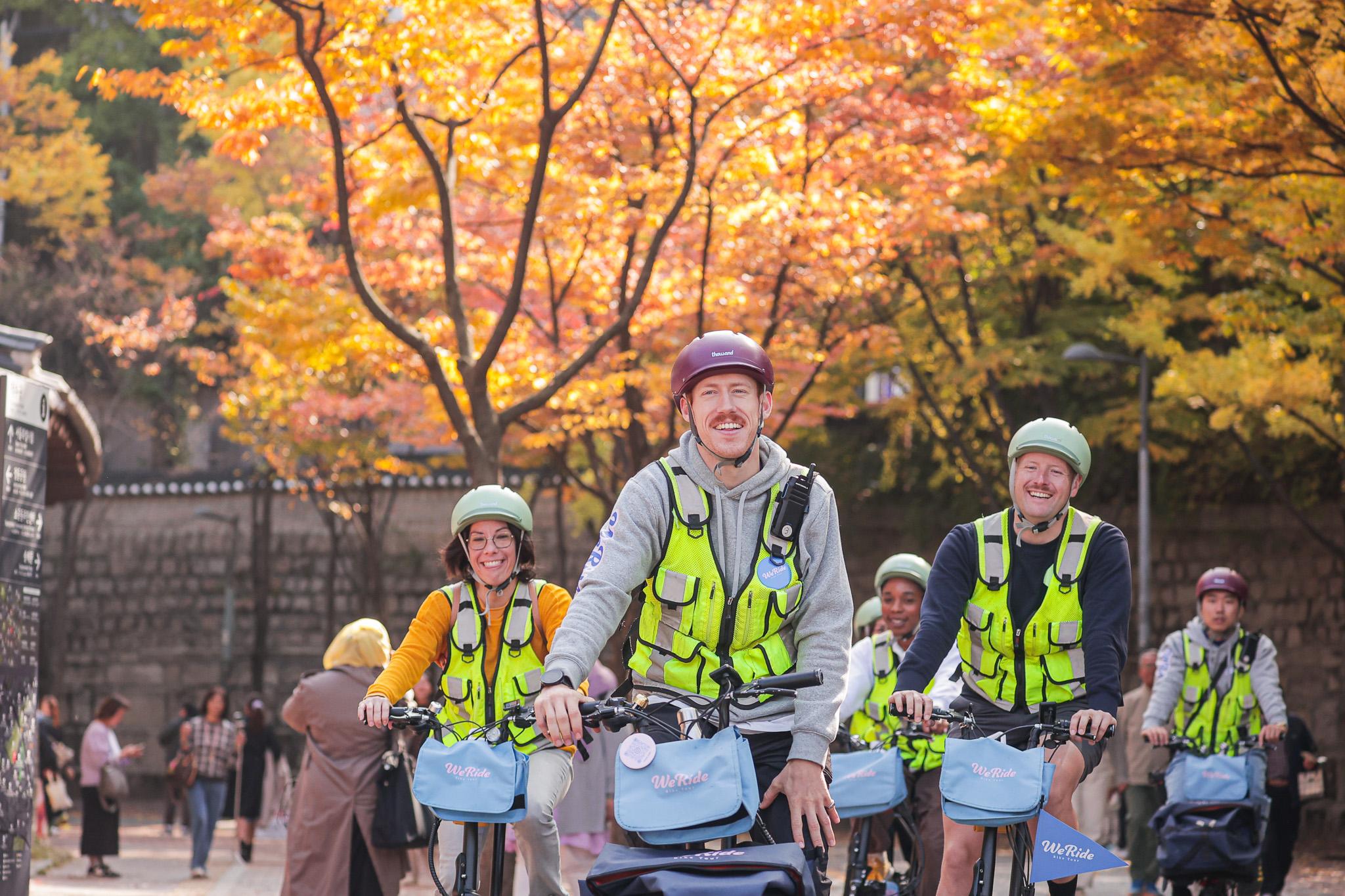
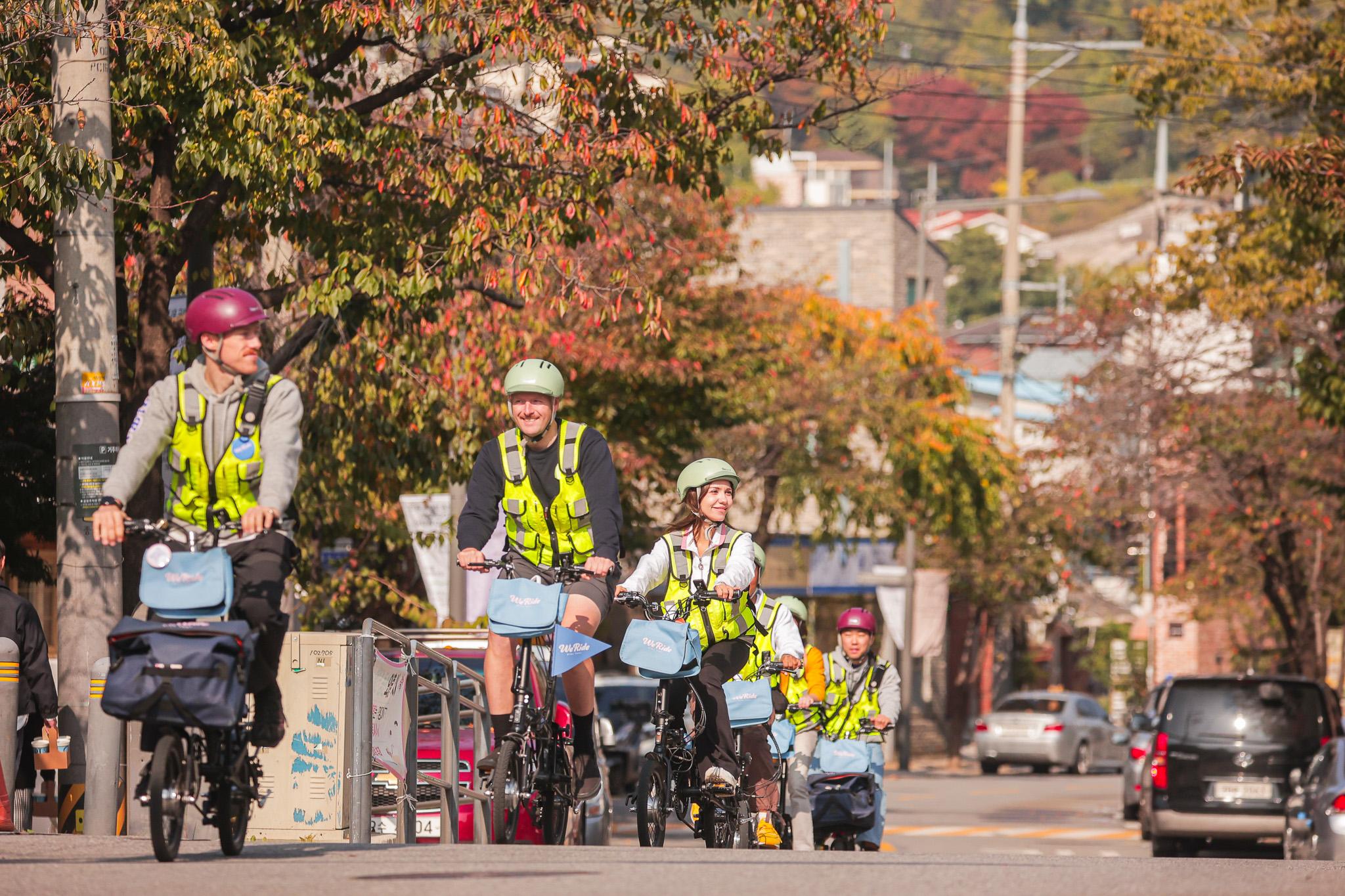
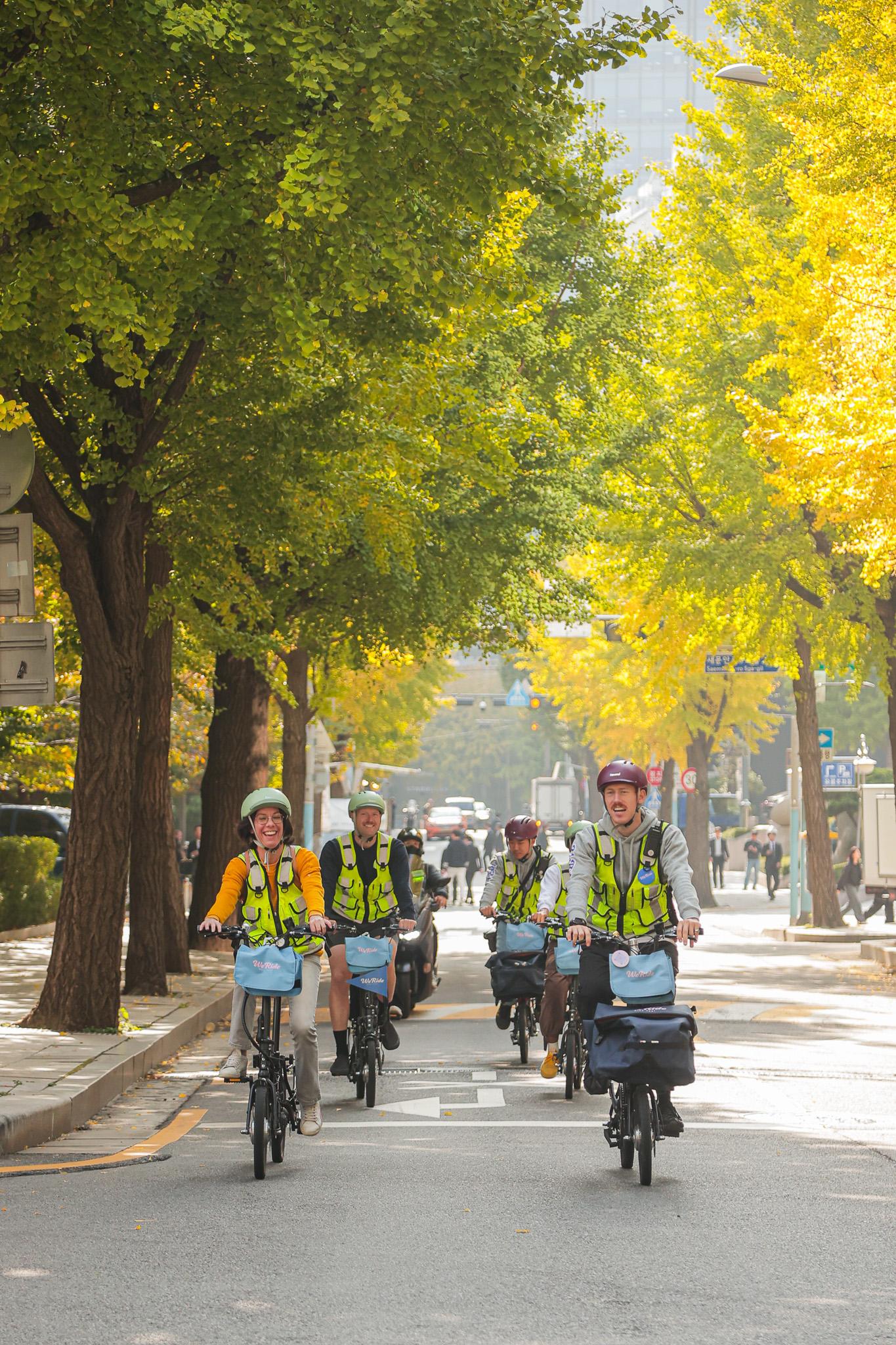
Riding the Han
The riverside paths below the expressways, the bridges at night, and the city grid behind them that is rather less flat.
Book Your Experience
Check Availability & Prices
Select your preferred date and time. Instant confirmation — free cancellation up to 24 hours before departure.
Four Ways to Ride in and Around Seoul
These three are cycling. The rail-bike day trips further down the page are not — they are in the shelf precisely because search results keep putting them in front of you.
| Feature | OUR PICK Guided E-Bike Tour of the City | Han River Morning Ride | Ttareungi Day Pass, On Your Own |
|---|---|---|---|
| What You Pay | From about $129 per person | From about $56 per person | ₩1,000 a day — under a dollar |
| Rating | 4.9 / 5 from 229 verified reviews | 4.8 / 5 from 82 verified reviews | Not applicable |
| Electric Assist | Yes — which is the point in a city this hilly | Check the listing | No. Ttareungi is a conventional city bike |
| Where It Goes | The city itself, hills included | The Han River paths | Anywhere in Seoul, but realistically the flat riverside |
| A Guide | Yes, live | Yes, a local | No |
| Needs a Korean Phone Number | No | No | No for a day pass. Yes for any season pass |
| Runs in Winter | Check dates — riverside conditions vary | Check dates | Yes. Most rental shops close Nov-Feb; Ttareungi runs all year |
| Best For | One properly good day, and getting above the riverside | A sociable flat ride with someone who knows the river | Cheap and flexible — unlimited one-hour hops for 24 hours |
| Check Availability | See the Han River Ride |
The Independent Guide
Cycling in Seoul: the Real Shelf, the River, and the Rail-Bike Confusion
Why your search returned a pedal cart in Gangwon province, what the Han River paths are actually like, and the e-bike rule that catches North American visitors.
Search for a Seoul bike tour and the results are dominated by something that is not one.
The Gangchon Rail Bike is a pedal-powered cart running on the decommissioned Gyeongchun railway line. It is in Chuncheon, Gangwon province — about 85 km from Seoul, roughly two hours each way by public transport. The course is 8.5 km, of which 6 km is the rail cart and the remaining 2.5 km is a motorised tourist train that carries you back. The cart section is mostly downhill; Chuncheon’s own tourism office describes it as not tiring.
It is a perfectly good day out. It is not cycling, it is not in Seoul, and if you came here wanting to ride a bicycle around the city you have been shown the wrong thing.
So this page does two jobs: the actual Seoul cycling shelf, and the river that makes it worth doing. The rail-bike comparison, in full, is here — including Nami Island, where cycling genuinely is part of the point.
Is Seoul good for cycling?
Superb along the river. Patchy to poor away from it. That split is the whole answer and most guides give you only the first half.
The Hangang riverside network runs 78 km — 47.5 km on the south bank and 30.5 km on the north, according to the Seoul Metropolitan Government. It sits inside the riverside parks, below the expressways, so there are no cars on it at all. For a capital city of this size that is genuinely unusual, and it is why cycling here is worth a day.
One honest correction to the way it is usually sold: it is not fully segregated. Under the city’s own 2024 plan only about 50.8 km is physically separated from the pedestrian path by a green divider; the rest is paint and delineator posts. The conflict on the Han River paths is with pedestrians and fast e-bikes, not with traffic — the city logged 88 accidents on the riverside paths in 2024, has put speed-warning installations at 33 sites rising to 40, and tried and failed to legislate a 20 km/h limit in 2021, because bicycles have no number plates to enforce it against.
Off the river it gets harder. Riders’ own complaints, collected in a 2024 focus-group report, are consistent: lanes blocked by parked cars, lanes that switch between roadway and footpath without warning, and — the recurring one — discontinuity between where people live and where the good cycling is. The city is closing the gaps slowly; one recent 1.7 km link finally joined the Cheonggyecheon and Jungnangcheon streams to the Han River, and before it opened riders were carrying their bikes across stepping stones.
And Seoul is ringed by mountains. The riverside is flat; the city grid behind it is not. That is the actual argument for electric assist here — not laziness, but the fact that the interesting parts of Seoul are uphill from the nice part of the ride.
See guided e-bike tours of the city →
Can foreigners use Seoul’s public bikes?
Yes for day passes — and it is the best-value thing in this guide. No for season passes, which need a Korean phone number.
Ttareungi (따릉이) runs roughly 45,000 bikes across about 2,800 stations. The app has a “Foreigner” button on the main screen: pick a pass, pay by card, scan the QR on the bike. The Korea Tourism Organization documents exactly this route, and no Korean phone number or alien registration card is needed for a day pass.
| Pass | 1 hour | 2 hours | 3 hours |
|---|---|---|---|
| Day | ₩1,000 | ₩2,000 | ₩3,000 |
| 7-day | ₩3,000 | ₩4,000 | — |
| 30-day | ₩5,000 | ₩7,000 | — |
The trick that makes it cheap: the hour is per ride, not per day. Dock the bike before your hour is up, take another, and keep going — unlimited times, for 24 hours, on one ₩1,000 pass. Overtime is ₩200 per five minutes, and leaving a bike out over four hours is treated as theft.
Two things to know. Ttareungi is not an e-bike — a 1,000-unit electric pilot announced in 2019 was postponed indefinitely, so any guide promising electric Ttareungi is seven years stale. And season passes require a Korean mobile number, which is the genuine wall for visitors. For pedal-assist, visitors use GCOO, Kakao T Bike or Elecle instead.
Against Han River rental shops at about ₩3,000 an hour, the day pass undercuts them roughly threefold. What the rental shops have that Ttareungi does not is tandems and family bikes.
The full Ttareungi walkthrough, including the subway rules, is here.
The e-bike rule that catches visitors
If you ride an e-bike at home, read this before you assume anything.
In Korea an e-bike is legally a bicycle only if it is pedal-assist, the motor cuts out at 25 km/h, and it weighs under 30 kg. That machine can use the bike paths, needs no licence, and is open to anyone 13 or over.
A throttle e-bike is not a bicycle here. Korea classes it as personal mobility or a moped — licence required, age 16 or over, and banned from the bike paths if it exceeds 25 km/h or 30 kg. For a foreign visitor that means a Korean licence or an International Driving Permit with a motorcycle category; a car-only IDP counts as unlicensed, at a ₩100,000 fine.
This catches Americans, Canadians and Chinese visitors specifically, because those countries include throttle models in their e-bike definition and Korea, the EU and Japan do not. Rented and tour bikes here are compliant — the trap is bringing your assumptions rather than your bike.
Three more rules worth knowing: riding on footpaths is banned for everyone; exceeding the legal rider capacity is a ₩40,000 fine — that is one person on a kickboard but two on a pedal-assist e-bike, so riding two-up on an e-bike is fine; and drink-driving law applies to bicycles.
The helmet question, answered properly
Guides get this wrong in both directions, so here is the whole of it.
Helmets have been legally mandatory for every cyclist in Korea since 28 September 2018, on roads and bike paths alike. That is the law and it is still in force.
There is no penalty, and there is no enforcement. It is an advisory provision. Before the law even took effect, the Ministry of the Interior and Safety stated that it had no plan to enforce or punish non-wearing. There is no fine and no stop-and-check, and compliance among casual riders is close to nil. Ttareungi supplies no helmets.
So: legally required, explicitly unenforced, almost universally ignored. One figure to make the decision with rather than a slogan — the head is the injury site in 38.4% of bicycle-accident injuries, in Korean hospital-discharge data reported in 2017. The one place a helmet is enforced, at a ₩20,000 fine, is on e-scooters and personal mobility, not bicycles.
Fine dust: the season nobody mentions
This deserves its own heading because English-language cycling guides routinely skip it and it will shape your trip.
In March 2026, 13 of the month’s first 23 days saw at least one of Seoul’s 25 districts reach the “bad” threshold for PM2.5 — about every second day — with a peak around 53 µg/m³ in the capital region. The causes that month were an unusually dry spring, atmospheric stagnation, and a large wildfire in Liaoning.
The measure of how seriously to take it: Seoul restricts and cancels its own official outdoor programmes when fine-dust warnings are issued.
Check AirKorea, the national monitoring network’s app, which gives you the nearest station and a next-day forecast. And there is a genuinely useful timing trick: on a merely “bad” day, ground-level dust peaks between 10:00 and noon and thins as the surface warms and it rises — on 23 March 2026, 23 of 25 districts were “bad” at 10:00 and only one still was by 14:00. On a “very bad” day the air is saturated and the time of day makes no difference.
When to go
Late April to early June, and late September to early November. Those windows sit after the worst of the spring dust and either side of the monsoon and the summer heat.
The monsoon typically runs from around late June to late July in central Korea, with two or three typhoons affecting the peninsula, peaking mid-July to mid-August. Winter thins things out: most of the twelve Han River rental shops close from November to February and reopen around early March because the paths ice, though Yeouinaru and Ttukseom stay open on reduced hours.
Cherry blossom in Seoul lands in the first week of April in a normal year — the Yeouido riverside festival covers a 1.7 km stretch planted with about 1,886 cherry trees, and closes it to cars entirely for roughly a week around the festival rather than just at weekends — which is either the best or the worst cycling week of your year depending on temperament.
One thing to check on the day, not in advance
Several Han River rides are sold around the Banpo Bridge Moonlight Rainbow Fountain — a Guinness-listed 1,140 m bridge fountain with 380 nozzles, free to watch, running in the warmer half of the year.
The schedule has flipped between regimes in recent years under energy-saving orders — at one point cut to three evening shows with the noon show dropped, and with the Ttukseom Music Fountain and the Yeouido Mulbit Plaza fountain suspended outright. The Han River authority’s current published table runs five shows a day including one at noon, rising to six in the June-to-September peak, and it carries that schedule under an energy-response heading.
So the number is live rather than settled, which is a reason to ring the fountain office on 02-3780-0578 on the day rather than to trust any printed timetable, ours included. It also does not run in winds of 7 m/s or more, when rain is forecast during a show, or when river turbidity is high.
Figures here come from the Seoul Metropolitan Government, the Korea Tourism Organization, the Korea Road Traffic Authority and Korean press reporting, checked September 2026. Ttareungi fares, fountain schedules and rental prices all move — confirm anything load-bearing before you rely on it.
Guest Reviews
What Visitors Say
4.9/5
from 229 verified guests
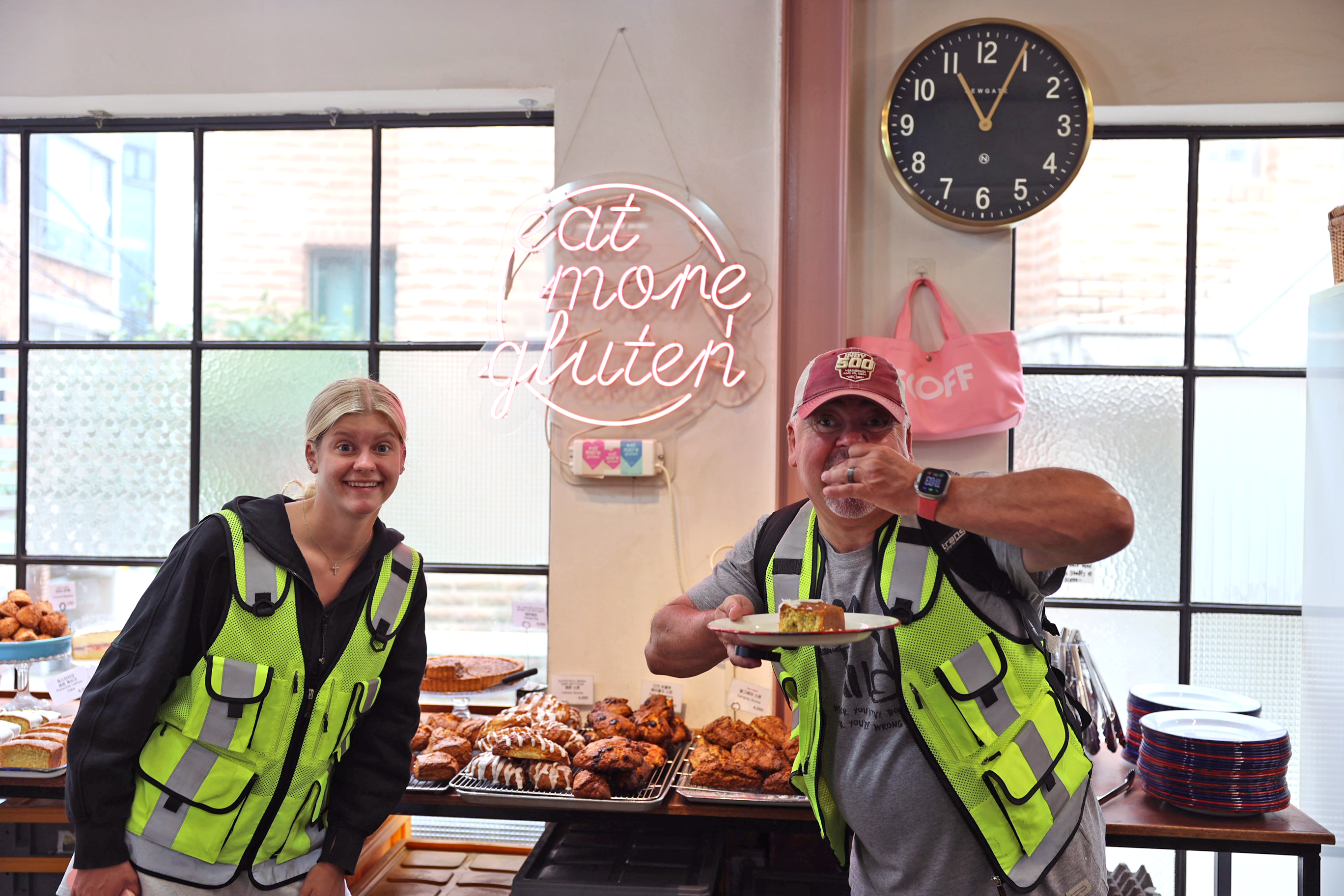
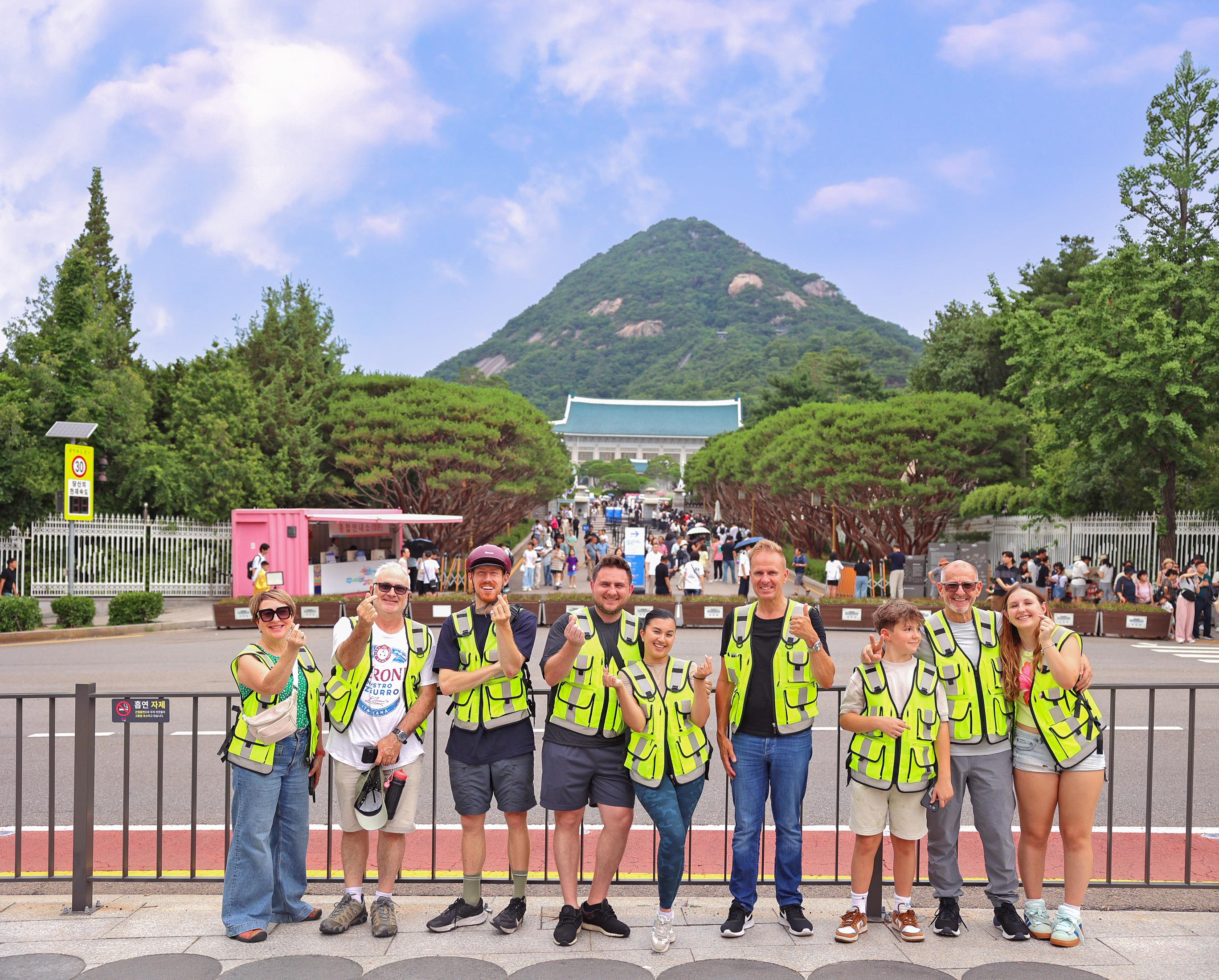
"Had a wonderful 3+ hour e-bike tour, with June and George. Visited far more local landmarks than expected, including little treasures like a traditional open market, a bakery/coffee shop, and of course: palaces, presidental house, temples, a Hanok village, ancient city landmarks, river bike paths, etc. This was a small tour group, so plenty of time to ask questions and chat with the guides. The eBikes were essential, given that Seoul is basically at the foot of Bukhansan Mountain, and there were a few good climbs that would have been challenging without the electric assist. The tiny wheels/tires are quite different from traditional US style mountain or road bikes, but it's a fast learning curve."
"The tour was a fantastic way to see Seoul! I highly recommend this tour and guides made us feel very safe."
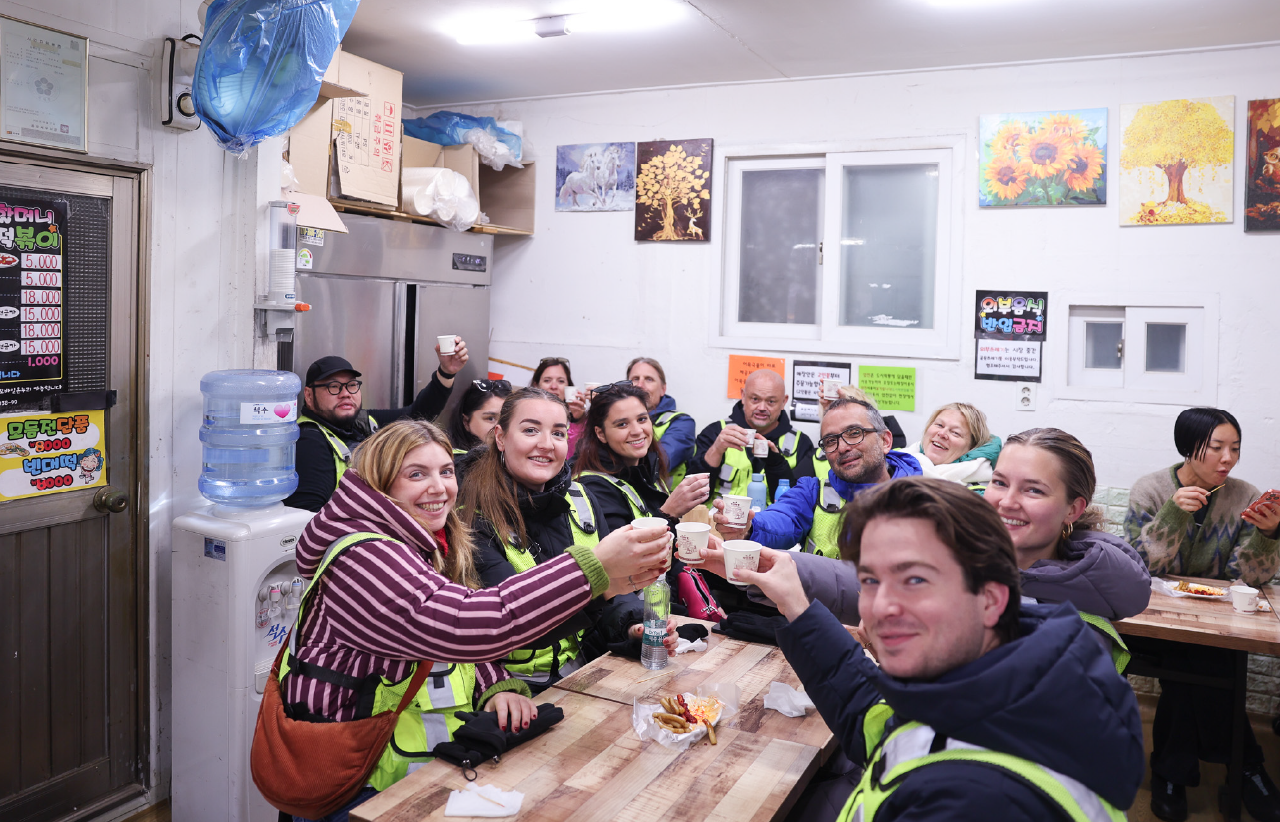
"Fillippo started our tour in the morning and was fab but then our group grew so we had Vincent take the remainder of the morning. So much fun. So insightful, with the right humour and an awesome bakery stop to refuel! All our family had an awesome time! Highly recommend."
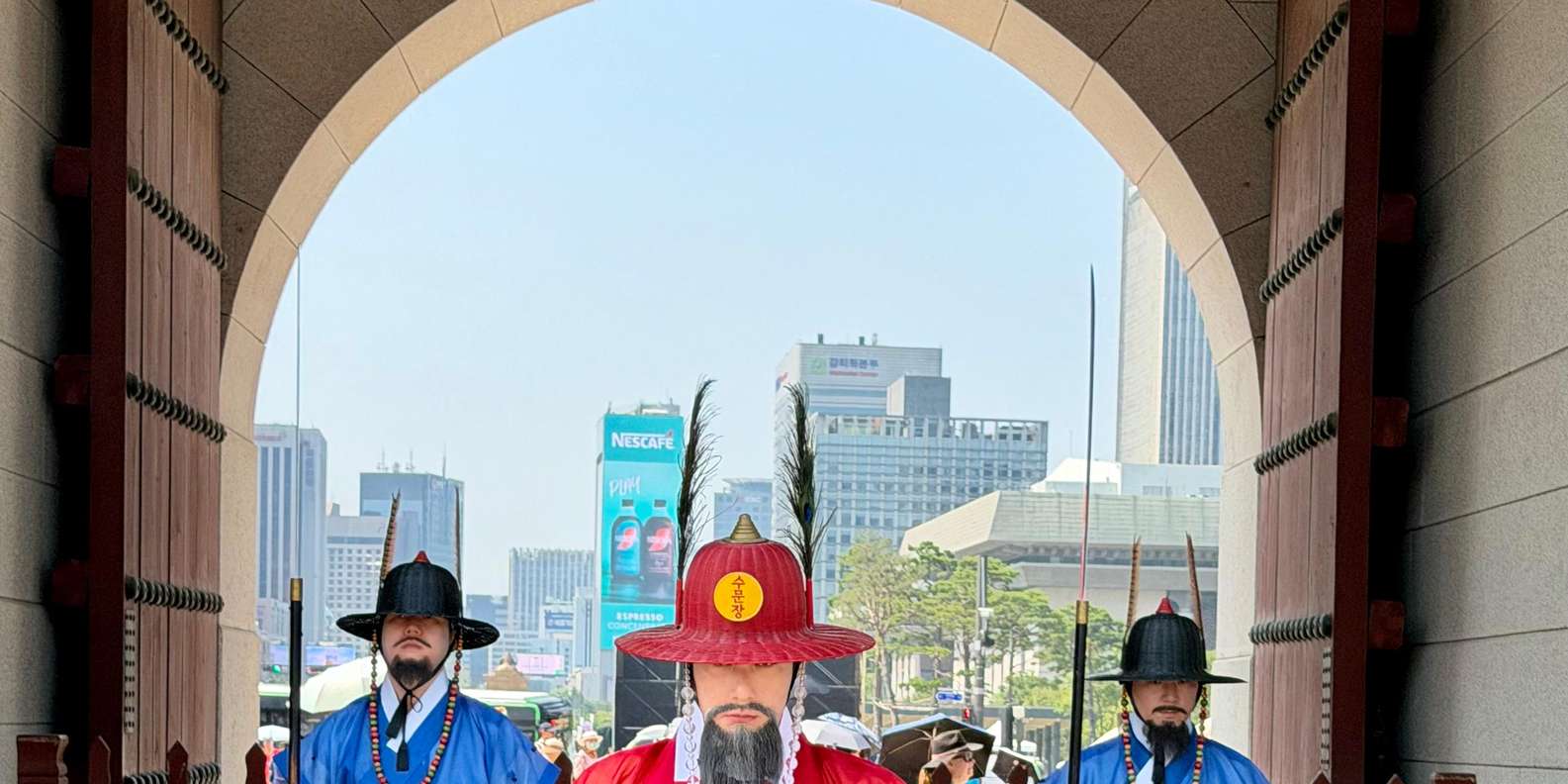
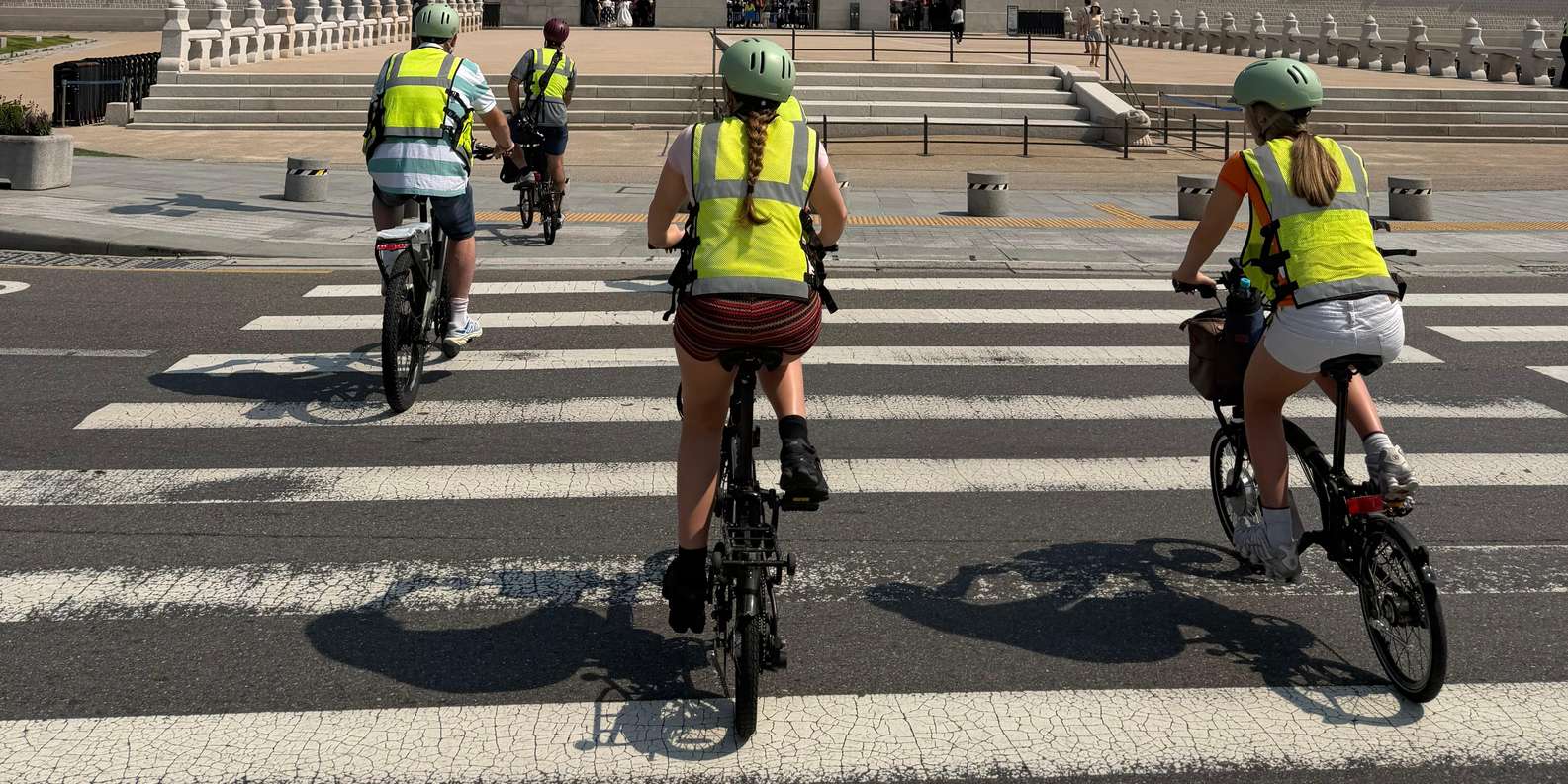
"Our family or four had a wonderful time. it was informative, fun, and a terrific way to see many sights. I highly recommend doing this tour."
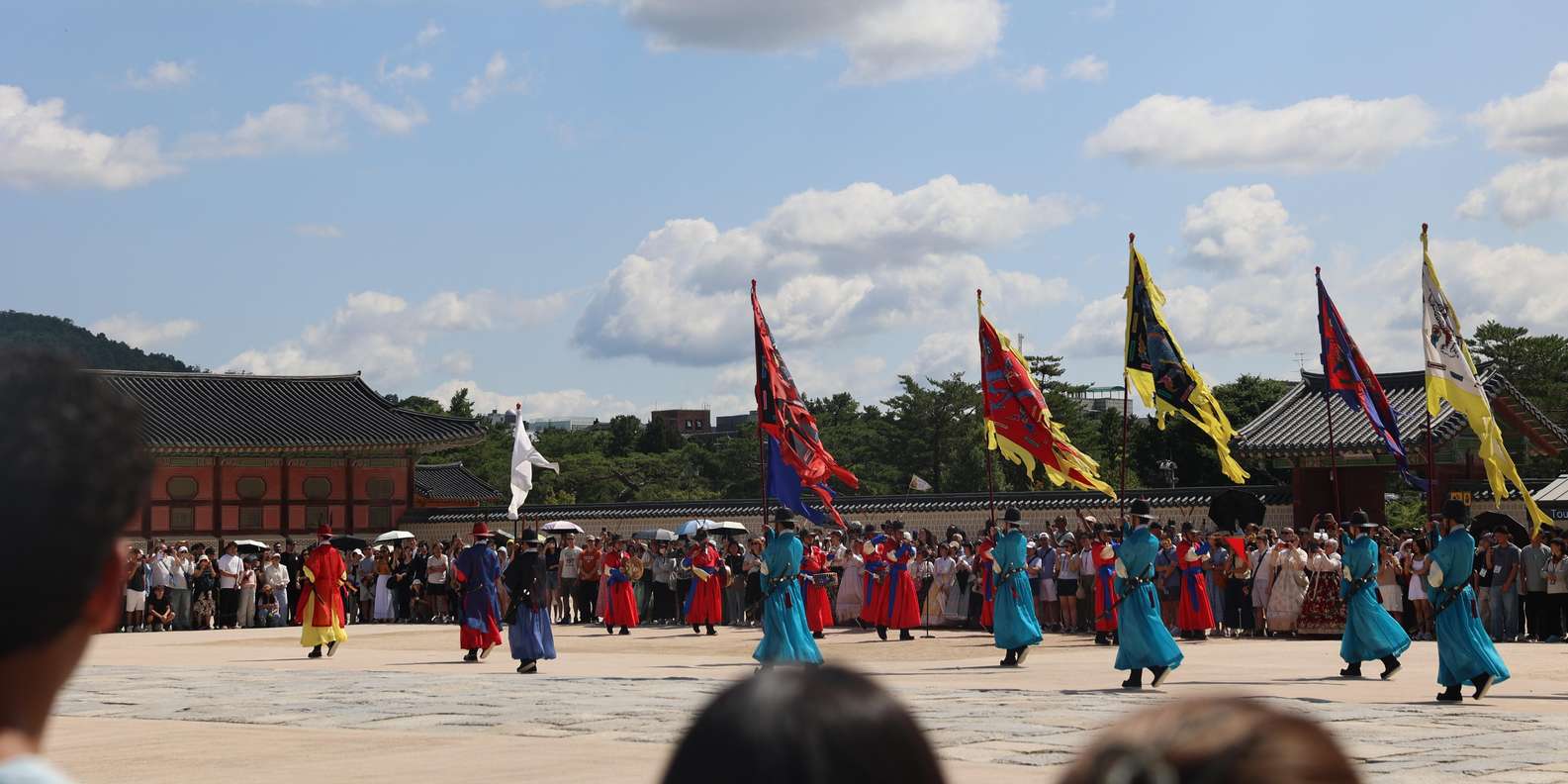
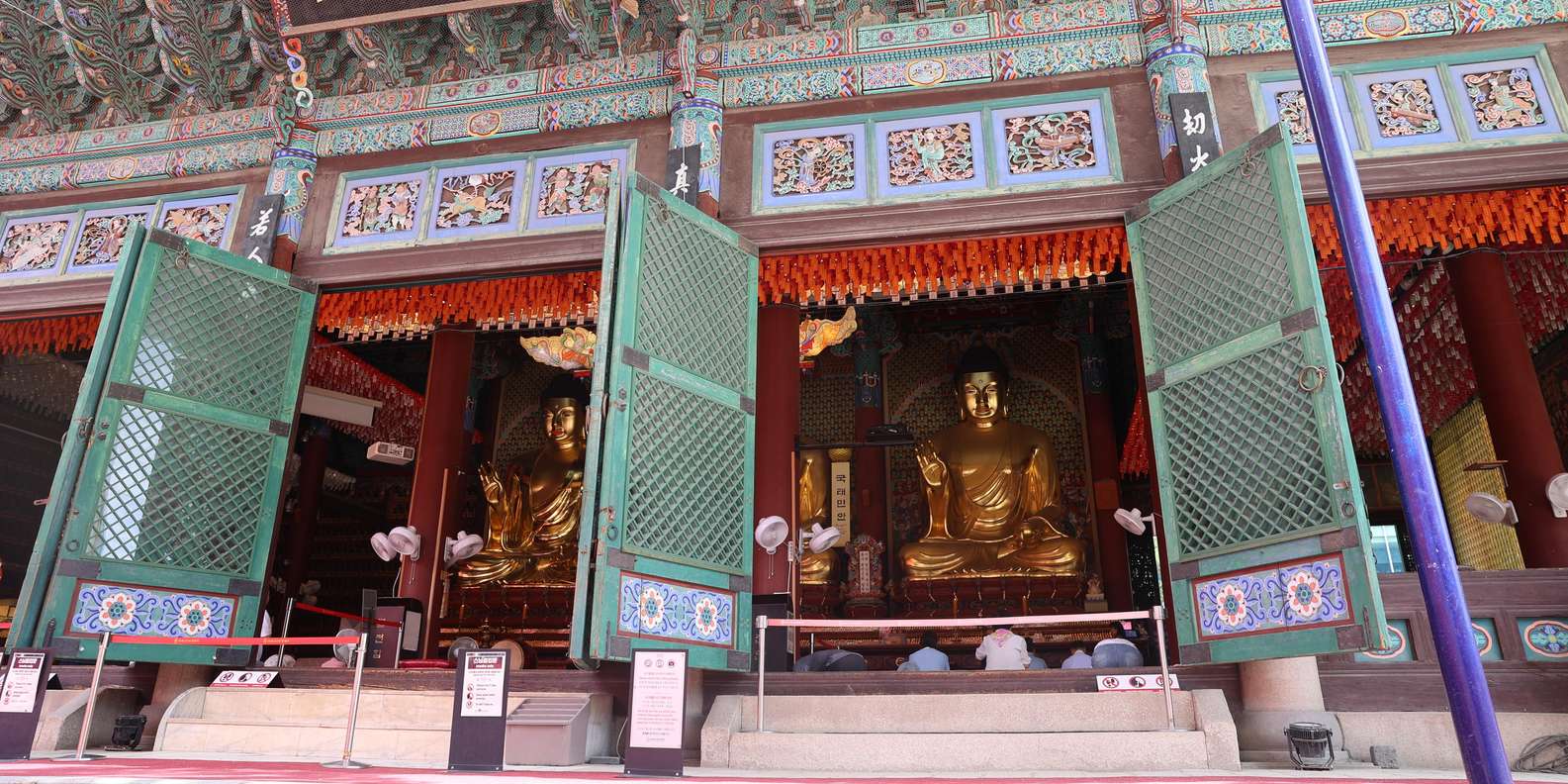
"Excellent tour and excellent live guide (Taejin). It's really one of the things to do to get a first glimpse of the city center."
"On the second day of our arrival in Seoul, we booked a bike tour with Filippo through downtown Seoul. We got a wonderful first impression of the country, the people, and the city. Filippo was a very experienced guide who could provide information on all questions, whether it was about politics, history or the customs of Koreans. We also didn't miss out on the culinary delights. We were a small group, so we felt like a good friend was showing us around his city. And all of it in perfect English and GERMAN!! Last but not least, we received a long list of tips and a lot of photos that Filippo had taken of us during the trip. The e-bikes were in top condition! We will rent a few more bikes for our own tours. Five out of five stars!"
"Fantastic tour, we were a group of six staying in Seoul after a cruise, this was without doubt one of the best days we had on our trip. It was fun and informative and the route and the sights and stops were all brilliant. Thanks to Vincent and Philip for a great tour"
Read all 229 verified reviews
See All ReviewsThe City Highlights E-Bike Tour
An electric-assist guided ride through Seoul itself — rated 4.9/5 by 229 verified guests, the highest rating of any cycling product on this shelf. Pedal-assist means the hills behind the riverside stop being the reason you skipped them. Starting from $129 per person.
Check Availability & BookCan't Make These Dates?
Browse More Available Options
Find a tour that fits your schedule — all with instant confirmation and free cancellation.
Seoul Cycling FAQ
The questions people actually type into Google before booking — answered in the first sentence, explained in the ones after.
Yes for day passes, and no Korean phone number is needed — the app has a 'Foreigner' button on the main screen. Install the app, tap Foreigner, buy a pass, pay by credit card and scan the QR on the bike; the Korea Tourism Organization documents exactly this route, and no alien registration card or Korean bank account is required. A day pass is ₩1,000 for one-hour rides, and non-members pay the same as members. The trick that makes it cheap: the hour applies to each ride, not the day — dock the bike before the hour is up, take another, and repeat as often as you like for 24 hours on that one pass. Overtime is ₩200 per five minutes, capped at ₩30,000, and leaving a bike out beyond four hours on a standard pass — six on the premium — is treated as loss. What you cannot do without a Korean mobile number is buy a season pass, which is the genuine wall for anyone staying a month. You will need a data connection — Korean SIM, eSIM or roaming — since the app handles the map and the unlock. Minimum age is 13. The full walkthrough is here.
Superb along the river, patchy away from it — and most guides only tell you the first half. The Hangang riverside network runs 78 km, 47.5 km on the south bank and 30.5 on the north, inside the riverside parks and below the expressways, so it carries no motor traffic at all. For a capital of this size that is genuinely unusual. Two honest qualifications. It is not fully segregated from pedestrians — about 50.8 km has a physical divider under the city's current plan and the rest is paint and posts, which is why Seoul logged 88 accidents on the riverside paths in 2024 and has speed-warning installations at 33 sites rising to 40. And off the river it gets harder: riders' own documented complaints are lanes blocked by parked cars, lanes that switch between roadway and footpath, and discontinuity between the residential city and the good cycling. Korea's long-distance network is a different matter entirely — the 633 km cross-country route from Incheon to Busan runs through Seoul and is excellent.
No, and this is why your search results look strange. A rail bike is a four-wheeled pedal cart running on the decommissioned Gyeongchun railway line at Gangchon, in Chuncheon, Gangwon province — about 85 km from Seoul, roughly two hours each way. You cannot steer it. Three things the listings tend not to lead with: only 6 km of the 8.5 km course is the rail bike, with the remaining 2.5 km covered by a motorised tourist train and a shuttle bus back; the cart section is mostly downhill, described by Chuncheon's own tourism office as not tiring; and it costs ₩40,000 for a two-seater or ₩56,000 for a four-seater. It is a perfectly good day out and it pairs naturally with Nami Island — it is simply not cycling, and it is not in Seoul. The full comparison, including Nami Island where cycling genuinely is part of the point, is here.
Pedal-assist e-bikes are legally bicycles and are fine on the paths. Throttle e-bikes are not, and that is the rule visitors get wrong. In Korea an e-bike counts as a bicycle only if it is pedal-assist, cuts the motor at 25 km/h, and weighs under 30 kg — that machine needs no licence and is open to anyone 13 or over. A throttle model is classed as personal mobility instead: licence required, age 16 or over, helmet mandatory — and it may still use the bike paths provided it stays within those 25 km/h and 30 kg limits and is certified. Exceed them and it becomes a moped, banned from the bike paths altogether and confined to the roadway. For a visitor that means a Korean licence or an International Driving Permit carrying a motorcycle category — a car-only IDP counts as unlicensed, at a ₩100,000 fine. This catches Americans, Canadians and Chinese visitors specifically, because those countries include throttle models in their e-bike definition while Korea, the EU and Japan do not. Rental and tour bikes here are compliant; the trap is assuming your home rules travel with you. Also: footpath riding is banned; exceeding the legal rider capacity is a ₩40,000 fine — one on a kickboard, but two on a pedal-assist e-bike, so riding two-up on an e-bike is legal; and drink-driving law applies to bicycles. Note too that a comprehensive personal-mobility safety act passed in December 2025, so this is an area worth re-checking close to your trip.
Legally yes, since 28 September 2018 — and there is no penalty and no enforcement. Guides get this wrong in both directions, so here is the whole of it. The amended road traffic act made helmets mandatory for all cyclists, on roads and bike paths alike, and that law is still in force. But it is an advisory provision: the Ministry of the Interior and Safety stated before the law even took effect that it had no plan to enforce or punish non-wearing. There is no fine, no stop-and-check, compliance among casual riders is close to nil, and Ttareungi supplies no helmets. So: legally required, explicitly unenforced, almost universally ignored. One figure to decide with rather than a slogan — the head is the injury site in 38.4% of bicycle-accident injuries, in Korean hospital-discharge data reported in 2017. The one place a helmet is enforced, at a ₩20,000 fine, is on e-scooters and personal mobility rather than bicycles.
Late April to early June, and late September to early November. Those windows sit after the worst of the spring fine dust and either side of the monsoon and the summer heat. The monsoon typically runs from around late June into late July in central Korea; two or three typhoons usually affect the peninsula, peaking mid-July to mid-August. Winter thins the casual option — most of the twelve Han River rental shops close from November to February because the paths ice, though Yeouinaru and Ttukseom stay open on reduced hours and Ttareungi runs year-round. Cherry blossom in Seoul lands in the first week of April in a normal year, and the Yeouido riverside festival covers a 1.7 km stretch planted with about 1,886 cherry trees and closes it to cars entirely for roughly a week, which is either the best or the worst cycling day of your year depending on temperament.
Yes, and it is the season English-language guides routinely skip. In March 2026, 13 of the month's first 23 days saw at least one of Seoul's 25 districts reach the 'bad' threshold for PM2.5 — roughly every second day — peaking around 53 µg/m³ in the capital region, driven by an unusually dry spring, atmospheric stagnation and a large wildfire in Liaoning. The measure of how seriously to take it: Seoul restricts and cancels its own official outdoor programmes when fine-dust warnings are issued. Check AirKorea, the national monitoring network's app, which gives the nearest station reading and a next-day forecast. There is also a genuinely useful timing trick: on a merely 'bad' day the ground-level dust peaks between 10:00 and noon and thins as the surface warms and it rises — on 23 March 2026, 23 of 25 districts were 'bad' at 10:00 and only one still was by 14:00. On a 'very bad' day the air is saturated and the hour makes no difference.
About ₩3,000 an hour for a standard bike and ₩6,000 for a tandem — but a Ttareungi day pass at ₩1,000 undercuts that roughly threefold. Twelve rental shops sit along the river at Yeouido, Ttukseom, Banpo, Jamsil, Gwangnaru and elsewhere, with overtime charged by the quarter hour; published prices have crept up recently, so budget ₩3,000 to ₩3,300. What the rental shops have that Ttareungi does not is tandems, family bikes and multi-seat machines — which is the real reason to use them, particularly with children. The seasonal catch is that most of the twelve close from November to February and reopen around early March because the paths ice — Yeouinaru and Ttukseom stay open on reduced hours, and Ttareungi runs all year. Hours run roughly 11:00 to 20:00 at the small shops and 10:00 to 21:00 at the large ones through the March-to-October season, and 11:00 to 19:00 at the two that stay open in winter.
Yes at weekends on most lines, with three exceptions that catch people. Lines 1 to 6 and 8 take bikes at weekends and on holidays but not on weekdays. Line 7 also allows them on weekdays between 10:00 and 16:00, as does the Gyeongchun line — which is the one out towards Gangchon. Line 9 never permits bicycles, on any day. The AREX airport line no longer takes full-size bicycles at all — its weekend reservation scheme was scrapped in January 2026 — and Sinbundang, Gimpo Gold and Ui-Sinseol never did. Three rules beyond the timetable: only the first and last carriages take bikes and they are marked with signage; transferring between lines with a bicycle is prohibited; and a folded folding bike is allowed anywhere, any day, which is the way around all of the above. These rules change periodically, so check before you rely on them.
It exists, it is free, and the published schedule has flipped between regimes in recent years — so ring before you plan around it. The Moonlight Rainbow Fountain on Banpo Bridge is Guinness-listed as the world's longest bridge fountain at 1,140 m with 380 nozzles, running in the warmer half of the year. The schedule has flipped between regimes in recent years under energy-saving orders — at one point cut to three evening shows with no noon show, and with the Ttukseom Music Fountain and Yeouido Mulbit Plaza fountain suspended outright. The Han River authority's current table shows five shows a day including noon, six from June to September. It is live rather than settled, so we are not going to print a timetable as fact. Call the fountain office on 02-3780-0578 on the day. It also does not run in winds of 7 m/s or more, when rain is forecast during a show, or when river turbidity is high. Night riding along the river is otherwise well established — the paths are lit and busy, Seoul runs its own official night walking tours on the Banpo course, and lights on your bike are legally required after dark.
It is Korea's certified long-distance network, and the cross-country route passes through Seoul rather than starting there. The main line — the 국토종주, or cross-country route — runs 633 km from the Ara West Sea Lock at Incheon to the Nakdong estuary bank at Busan, taking in the Ara path and then the Han River through Seoul; the Han River route from the Ara lock to the Chungju dam runs about 192 km, and the full certified network across twelve named routes totals about 1,857 km. There is a bicycle passport with self-service stamp booths, and three of them are inside Seoul: Yeouido, Ttukseom and Gwangnaru — stamping either Ttukseom or Gwangnaru automatically credits both. Completing routes earns a sticker and certificate free, with a medal at ₩7,500 and a case at ₩4,000. There is also an app for cyber-certification. Collecting a stamp on a ₩1,000 day-pass bike is a cheap souvenir of a route you did not ride.
Still have questions? Email us at info@seoulebiketour.com